← The Goldsmith's Year · Play the demo
The Goldsmith's Year: game design
- Date: 2026-10-05
- Status: active
- Type: plan
- What: the whole game as I see it, start to finish: every mechanic and its harder tiers, the year, the cast, the systems, every screen (built or not), the assets and what they cost, the ads question, and the build order. Sal asked for it so he can decide where the build slots in.
- Report:
plans/2026-10-05-game-design.html, built from this file with the pictures. - Inputs: the craft and setting bible (
plans/2026-10-04-craft-and-setting-bible.md), the pitch (pitch/index.html), the release plan (plans/2026-10-05-finish-and-release.md), the AI-only asset costs (plans/2026-10-04-asset-costs-ai-only.md), and two research passes done today: paid ads, and the platinum tier and 1911 facts.
No build times anywhere. Where a number is my own working rather than a source, it says (inferred).
The game in one screen
| What | A cozy craft game. You are the new goldsmith of a Minho parish across the twelve months of 1911. You make real traditional jewellery for villagers and for figures from folklore, at a bench where every step is a real decision and can go wrong |
| Where | iPad and Apple-silicon Mac first, premium, at $14.99. Apple Arcade pitched with no cutoff. Steam later as a port, behind a Coming Soon page put up now. Android tablets as a cheap later port |
| Length | About 95 commissions over 12 chapters, roughly 35 to 50 hours (inferred from Dressmaker's 20 to 30 minutes a piece; unmeasured) |
| Mechanics | 38 hand verbs across 9 bench stations, each one reused at harder tiers. There are 6 metal tiers, from copper practice up to platinum, plus 15 shop and world systems |
| People | 31 named characters (11 from folklore) and 10 walk-in villagers. Optional romance with 4 of them |
| Pieces | 28 piece types, every one a procedural 3D model, never a generated image |
| Screens | 10 built (the slice), 3 mocked in the pitch, 55 still to build |
| Asset bill | About $380 for an English launch on iPad and Mac, text-only. That's every image, music, sound effects and the store fees, with no paid humans. Add $18 a language for text |
| Ads | Cold paid ads won't pay back at $14.99: each sale costs about 2 to 5 times what it nets. Spend ad money on pre-order and launch bursts, plus a capped Apple Ads test with a stop rule |
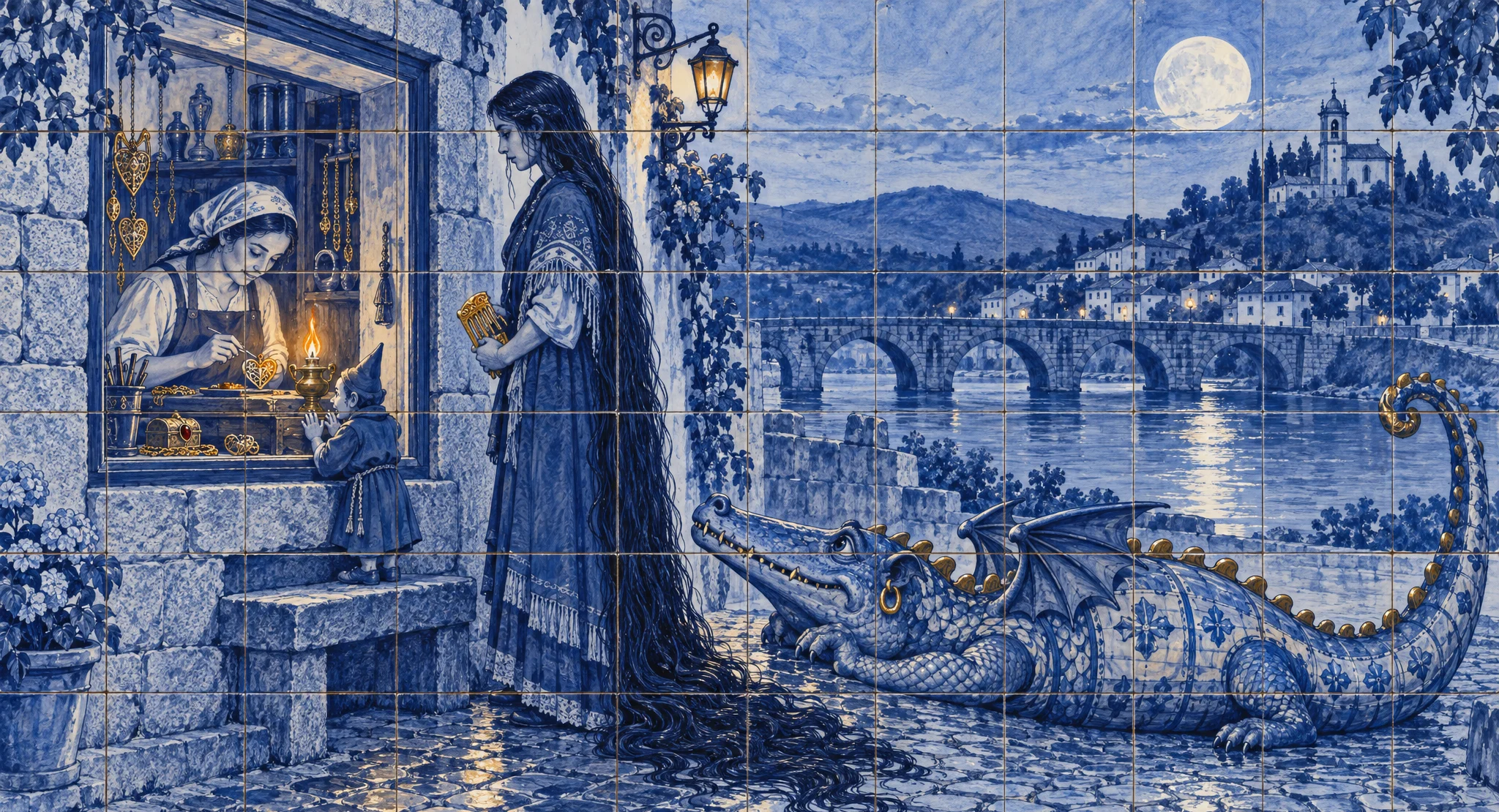

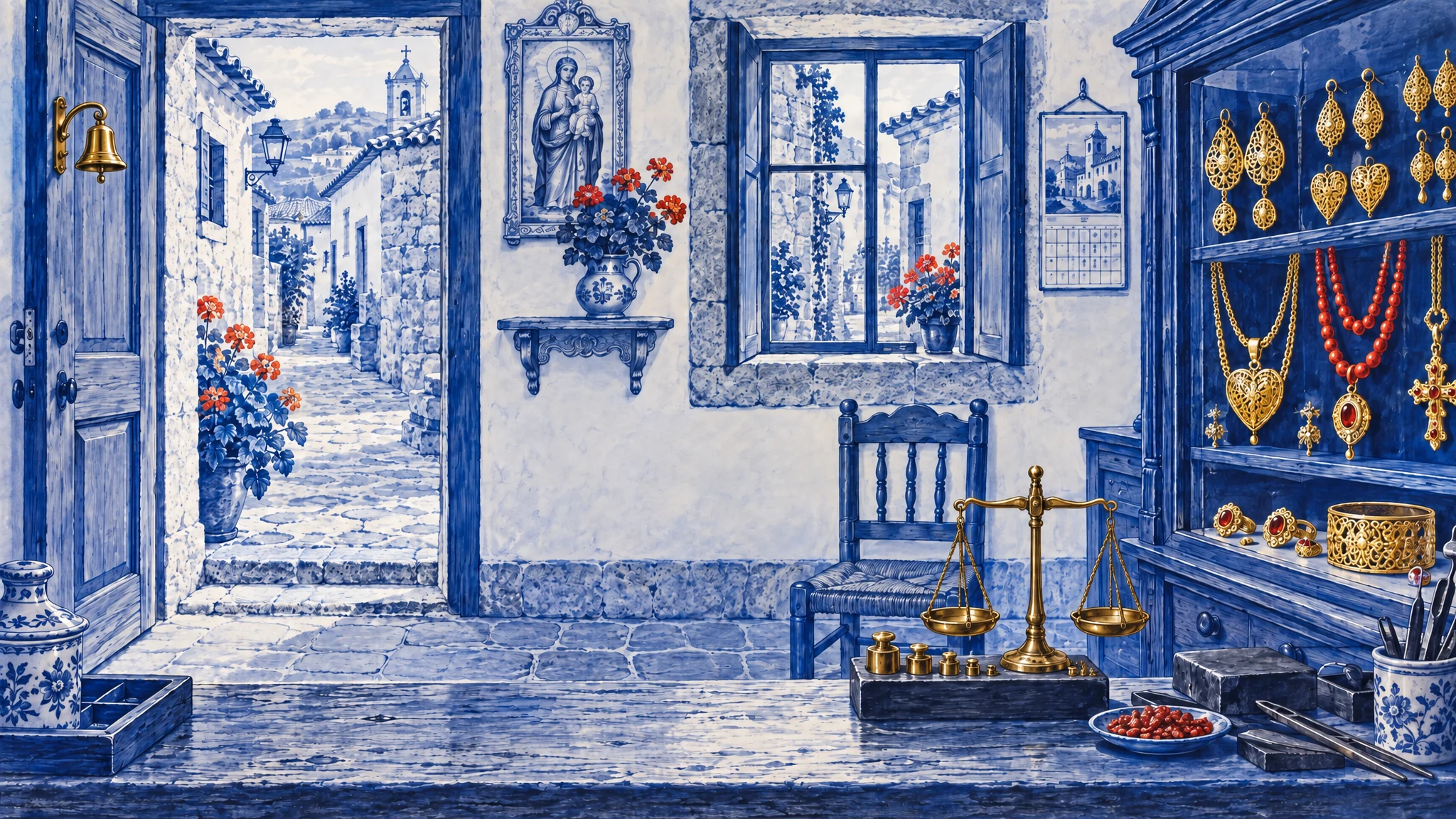
Key art and title from the pitch. Everything painted is a generated plate or portrait; the jewellery itself is procedural 3D.
What changed today
- Tablet premium is the main route (Sal: "tablet is a heavy play. Better than Steam"). The Arcade form still goes in, with no cutoff: if Apple says yes at any point before launch, take it. Steam stays deferred behind the Coming Soon page.
- "We'll just run ads against it." The ads research says cold paid acquisition won't pay for itself on a $14.99 game. The numbers are in Ads, along with what ad money can do.
- Sal wants more mechanics, not fewer, and each verb reused at harder tiers ("instead of gold, it's platinum"). That's the backbone of this doc: Same verb, harder work.
- Platinum is real for 1911, but only through Porto, and it changes every rule at the bench, not just the heat. White gold is out (an anachronism until 1913 to 1917). The research also fixed the timing of the church inventories, casting methods, stones and the escudo: see 1911 facts.
Pillars
- Every verb is a real decision with a visible result. This is Dressmaker's rule, applied to a goldsmith's bench. Nothing is a chore, and nothing is a quick-time event.
- Real stakes. Ruined work costs gold, réis and the customer's trust. There's no free undo, and "Scrap it" melts the piece (decided 2026-10-04).
- Same verb, harder work. Thirty-eight verbs come back across the year in harder metals, finer scales, more joints, more fragile stones, tighter deadlines and folklore rules. Mastery is the progression.
- The year sets the pace. Real 1911 feasts are the deadlines. The calendar is the story.
- Colour means metal or heat. The world is cobalt on white tile; only gold, gems, coral and fire carry colour. That's an art rule and a play signal: you read the temperature against the blue (
ui.md). - People are painted, objects are 3D. The jewellery is procedural and never a generated image (
decisions.md). - Folklore written straight. These are living traditions. Adapt gently, flag inventions, and keep the moura free of caricature (bible, Part C).
The shape of play
A day
| Slot | What happens |
|---|---|
| Morning: the counter | The bell goes. Someone brings a commission, a repair, gold to sell or pawn, a bead to add to a necklace, or a complaint. You measure, weigh, test and quote. |
| Afternoon: the parish | You pick one place on the map: deliver, buy stock, gossip at the lavadouro, cross on Tomé's ferry, go to the fair, collect frames from the enchedeiras, send a parcel to the Porto assay office. |
| Day: the bench | You work the commission step by step at the stations. |
| Evening: lamp work | Annealing and soldering read best in dim light, which is true at a real bench, so fire work goes faster and safer in the evening. In winter the light goes earlier. |
| Night: the other customers | On feast nights the folklore customers come. Most nights it's the Fradinho, after your solder chips. |
Each bench step takes a slot or part of one (inferred model, to tune). A commission is due on a date, so the day planner is a light scheduling puzzle: what to start, what to send out to the enchedeiras, what to leave until after the feast.
A month
Every month is a chapter with one feast and its deadline. Each chapter brings a new station or tier, a story commission, two or three village commissions, a folklore night, quick repairs, and Abílio's instalment at month's end.
The year
You arrive in January, owing Abílio for the shop. By August's romaria you're dressing the parish in gold. By December you're working platinum for a client in Porto. You pay the last instalment, make your masterpiece, and take on an apprentice, whom you now coach by ear the way Abílio coached you.
Same verb, harder work
This is the core of the design, and Sal's ask: each verb comes back harder, in more ways than one.
The metal tiers
| Tier | Metal | Why it's harder | When |
|---|---|---|---|
| 0 | Copper and brass | Practice metal. Forgiving and cheap, used for Abílio's lesson pieces and the free bench | January, and always in the free bench |
| 1 | Silver (833‰ and 916‰) | Firescale stains the surface, so it needs pickling. Annealed in the forge. Silver solders flow well below the metal, so there's a wide margin | January on |
| 2 | 800‰ gold, the ouro de lei (19.2k) | The folk standard and the deer's-head mark. Gold solders flow only 100 to 150 °C under the metal, a much narrower margin than silver. Every gram is the customer's money | January (Custódia's ring) on |
| 3 | 916‰ gold (22k) | Softer, so bezels pleat, pieces dent and polishing eats detail. It needs higher-karat solder to match the colour, so the margin is narrower still. Worth more per gram | June (the moura's comb) |
| 4 | Coloured golds (rose with copper, green with silver) | You mix the alloy yourself to hit a colour and a fineness. Rose gold hardens again if it cools slowly, so you quench it at once. The solder has to match the colour | July on |
| 5 | Platinum, first platinum-topped gold, then all platinum | It melts at about 1,768 °C, 700 °C above fine gold, so a mouth blowpipe can't reach it. It needs a city flame (town gas or hydrogen with bottled oxygen) and dark glasses. It anneals at bright orange but has to be held there; above that it glows white and the colour cue is gone. Everything changes at the bench at once: no flux and no pickle, a clean-bench rule instead, no spring-back, slow polishing, and the stones come out before any soldering | October (topped gold) to December (all platinum) |
Platinum at the bench, as the research found it. Each of these is a rule the player learns the hard way:
- The flame is the quest. In 1911 an all-platinum piece needed an oxy-gas flame. Oxy-acetylene welding dates from 1903, and Lang credits the torch with making all-platinum jewellery possible (Lang, Edwardian). Modern guidance warns against acetylene itself, because its carbon contaminates platinum (Stuller), so "the wrong fuel" is a real mistake. Portugal had no oxygen maker until Air Liquide in 1923 (Air Liquide), so the oxygen comes in a cylinder from abroad, through Gaspar in Porto. Town gas existed in Porto from 1855 and in no Minho village. That's why platinum arrives as a letter from Porto, and why Gaspar lends you the torch.
- Heat is read by colour, then by the solder. Annealing is still "a bright orange (about 1,000 °C)", but it needs a soak of about a minute where gold takes seconds (Stuller 3). Above that the metal is just white. Through the dark glass you watch the solder: each grade is named for its flow point (1000, 1100, 1200, 1300, then the weld grades up to 1700 °C), so the solder is the thermometer (inferred from the grade naming; no source states it as the method).
- Dark glass. Modern practice is shade #5 for short soldering and #6 for longer work, and "never use sunglasses" (Ganoksin). What a 1911 jeweller wore isn't recorded; smoked or cobalt glass is our stand-in.
- No oxide, so no flux and no pickle with the hard solders (Stuller). The enemy is contamination instead: lead makes platinum "brittle and unworkable", and gold or silver dust on a shared file or buff burns into the surface. Once it's contaminated, "refining is the only way to reclaim the platinum". So platinum gets its own file, emery and buff, and a lead check.
- It behaves differently in the hand. It conducts heat poorly, so you can solder close to the tweezers. It's a "dead" metal with no spring-back, so a pushed prong stays put. You file it in circles, not straight strokes (Orchid). It polishes slowly, with its own compounds and buffs, and burnishing brightens it (Ganoksin). It's about 11% heavier than fine gold, and everything is sold by weight.
- Stones come out first. "If soldering with platinum, do not leave the stone set" (Stuller). Diamonds go in after the fire.
- The middle step is real. Before the torch, platinum was "sintered, rolled, or brazed over a layer of gold" (Lang). So October is platinum-topped gold on your own blowpipe, and December is all platinum on Gaspar's torch. Period jewellers used platinum with 5 to 10% iridium for strength.
- Who could do it. One or two top Porto or Lisbon houses, not a village bench. A Porto house (José Rosas Júnior) made a gold, platinum and diamond brooch in 1910 (newgreenfil). Our goldsmith reaches it only through Gaspar, which is the point of the endgame.
- The price. In 1911 platinum averaged $43 a troy ounce in New York against gold's fixed $20.67, about 2.1 times (USGS). Russia supplied about 96% of the world's platinum that year (USGS Bulletin 666-D). The style it served was the garland style: bows, swags and laurel in platinum and diamonds, with millegrain edges, a technique "made possible by the use of platinum" (Lang, Edwardian).
What each tier does to each verb
| Verb | Silver | 800‰ gold | 916‰ gold | Coloured gold | Platinum |
|---|---|---|---|---|---|
| Saw | 1.5 mm stock, blade 1 | Thinner sheet, blade 2/0 | Soft and grabby; snaps blades | As 800‰ | Wears blades fast; its own blades only |
| Anneal | Dull cherry in the forge | Dull cherry at the lamp | Lower temperature; slumps fast | Rose: quench at once | Bright orange, then hold it there for about a minute |
| Solder | Hard, medium, easy; wide margin | 100 to 150 °C margin | High-karat solder, narrowest margin | The solder colour must match | Dark glass on, no flux; watch the solder slump, since the colour cue is gone; or weld |
| Form and true | Springy | Moves well | Dents under the mallet | Rose is stiff | Dead metal: no spring-back, it stays where it's put |
| Set | Bezel in fine silver | Bezel pushes cleanly | Pleats if you push hard | — | Prongs stay put; millegrain; stones out before any heat |
| Polish | Firescale to remove first | Four stages | Over-polishing loses detail | Each colour shows scratches differently | Its own buffs and compound; many more passes; burnish to brighten |
| File | Straight forward strokes | Straight strokes | Clogs the file | — | In circles, with its own file: gold dust burns in |
| Engrave | Clean cut | Clean cut | Soft burr | — | Slow, needs sharp gravers (inferred) |
| Filigree | Thick twist, forgiving | 0.22 mm twist | Slumps in the fire | — | Not used: Minho filigree is silver and gold |
Other ways a verb gets harder
- More joints. One seam, then two or three in hard, medium and easy order, then a whole filigree heart soldered at once. Every later joint has to flow below the ones before it.
- Stones that can't take heat. Garnet tolerates the flame; coral, pearls, jet and enamel don't. With a stone in place you work under heat sinks (damp clay, tweezers), and acid baths are out for pearls and coral.
- Smaller scale. Finer wire and finer blades: 4/0 cuts sheet up to 0.5 mm and snaps if you rush.
- Inside surfaces. Engraving and polishing the inside of a ring, where the tool can't see.
- Hollow work. Beads and hearts made from two halves can't take a mallet.
- Repairs. Old joints you mustn't reflow, an alloy of unknown fineness (test it first), and someone else's bad work to undo. The nastiest is an old lead or tin repair: soft solder heated above about 250 °C alloys with gold and eats a hole in it (Orchid). The only sign is a tiny grey patch. Spot it and scrape it off, or the heart gets a hole at soldering heat.
- Folklore rules. Each changes how a verb plays:
- The moura: an unsalted loaf on the bench, and tell no one.
- The Tear de Ouro shuttle: once you start, you can't stop, so there's no pause and no "Scrap it".
- Agostinho's cross: rebuilt while he holds it, so you work around his hand.
- The Coca: a hard deadline at Corpus Christi.
- A watcher. Dona Albina watches the scale, and every 0.1 g counts against your quote.
- Light. Winter dark comes early, and the platinum glare needs dark glass.
- Assist off. Assist is always free, but a mestre grade on a verb asks for at least one piece made without it.
Grades
Each verb tracks a grade from your results: aprendiz → oficial → mestre.
- Grades unlock harder commissions and better pay. Abílio says so out loud.
- They show on the pattern book page for each piece.
- A mestre grade on every verb is the long goal, and the second year (post-launch) is built on it.
The stations and their verbs
There are 9 station rigs on the one persistent 3D bench (slice/src/bench/bench.ts) and 38 verbs across them. "Built" means built in the slice at the True/Polish bar.
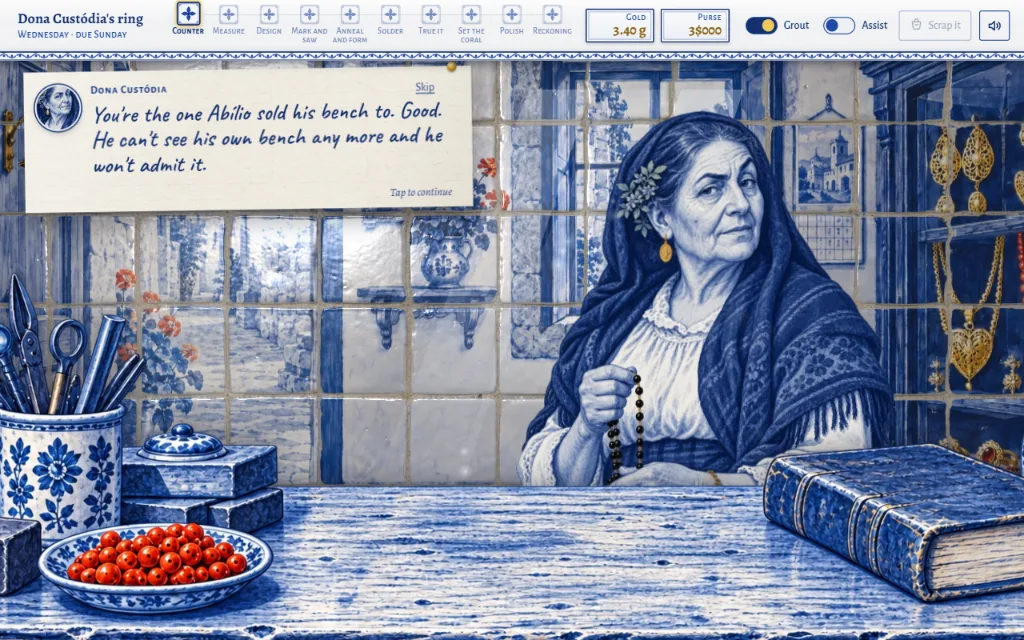
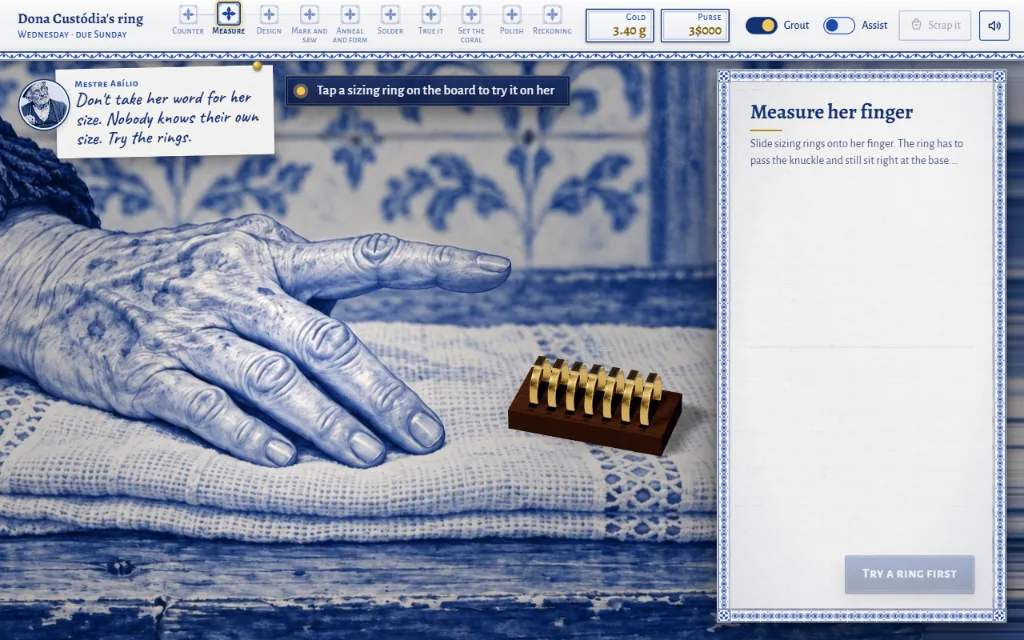
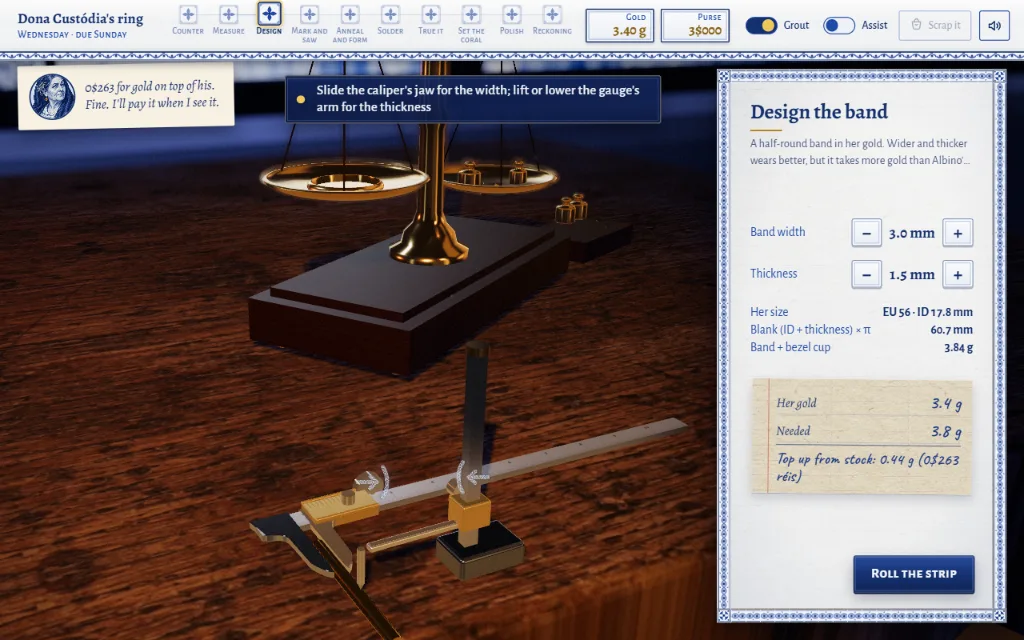
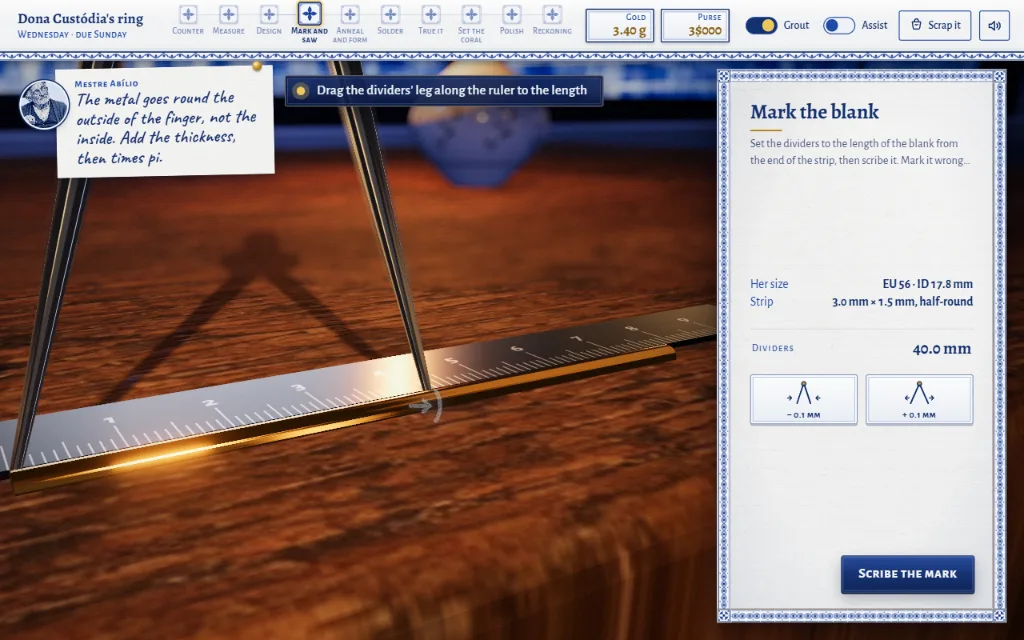
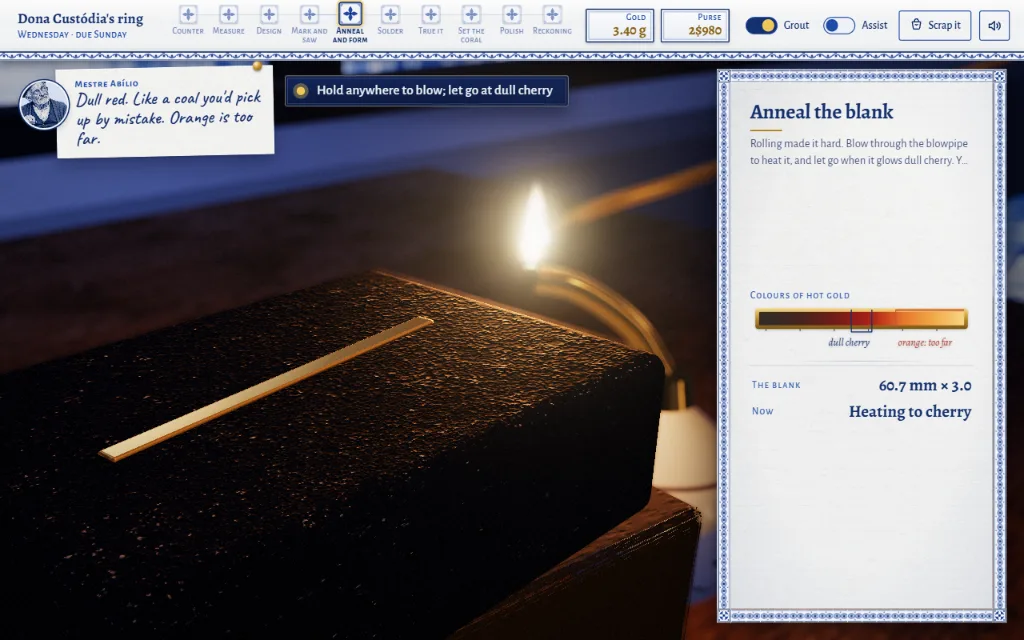
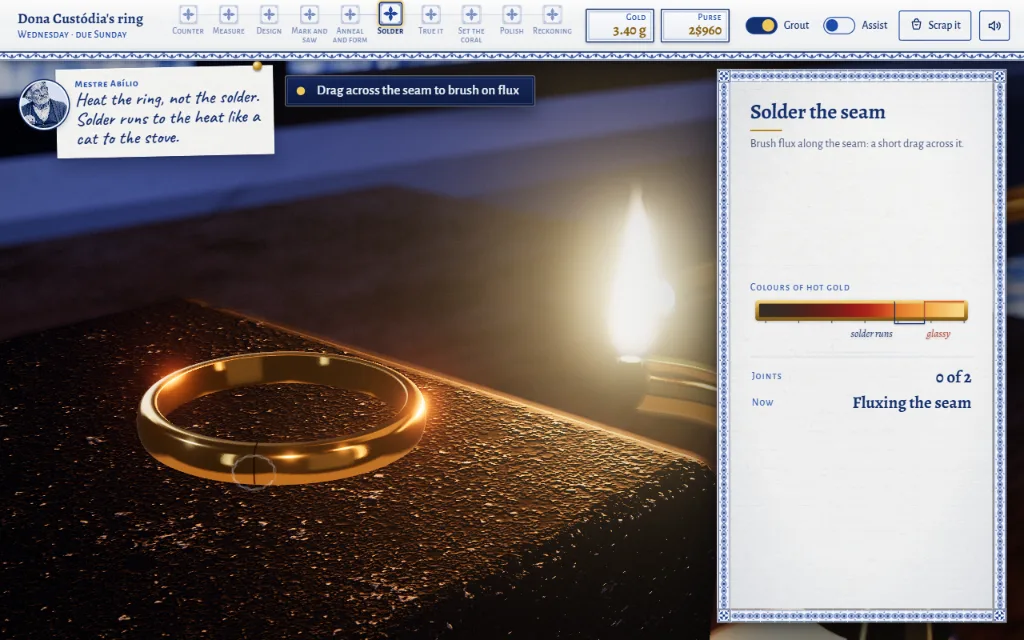
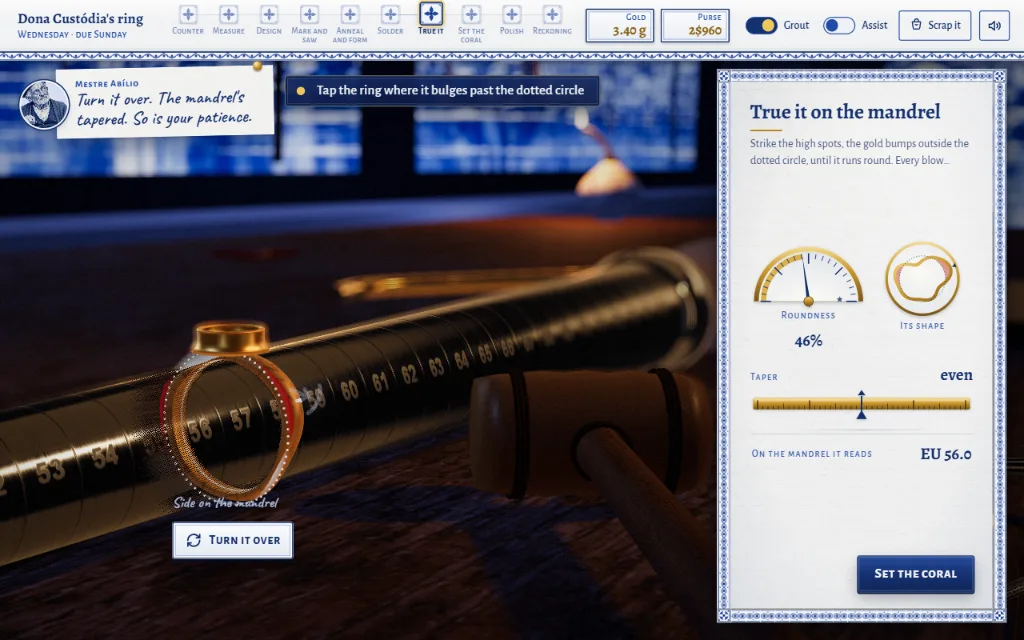
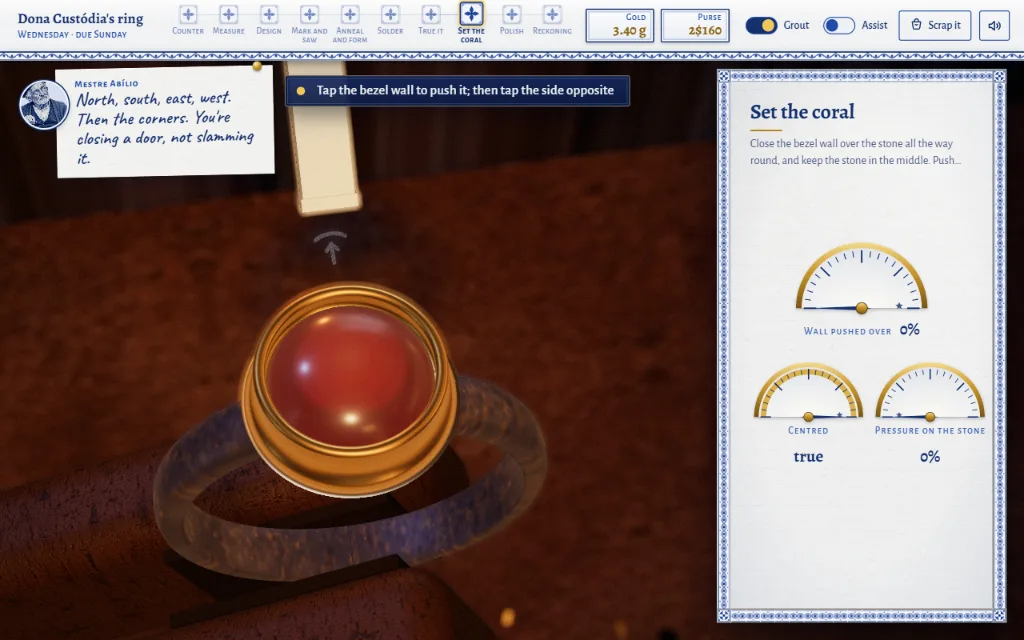
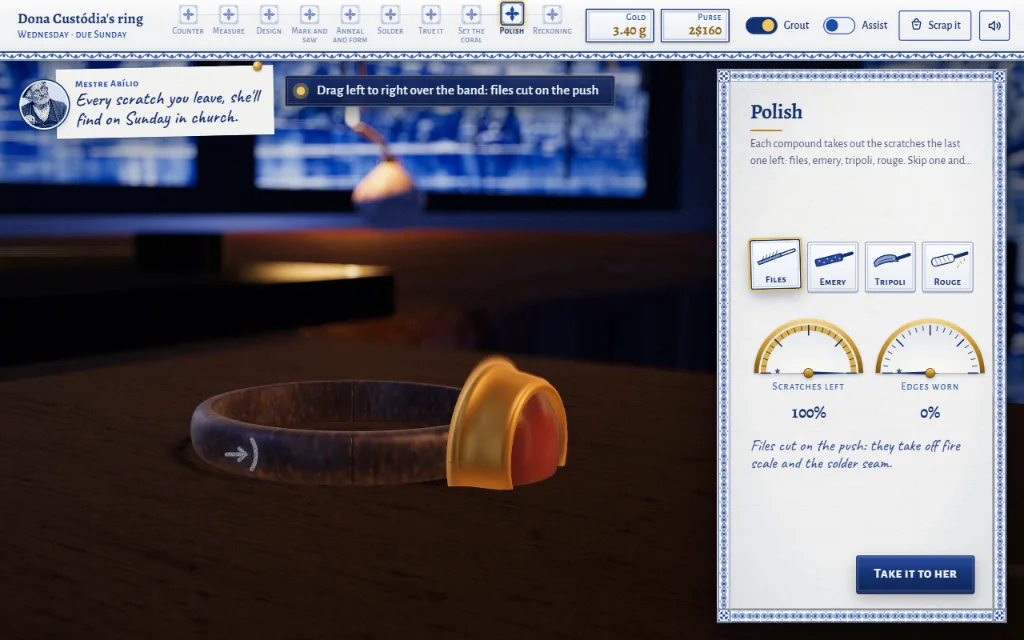
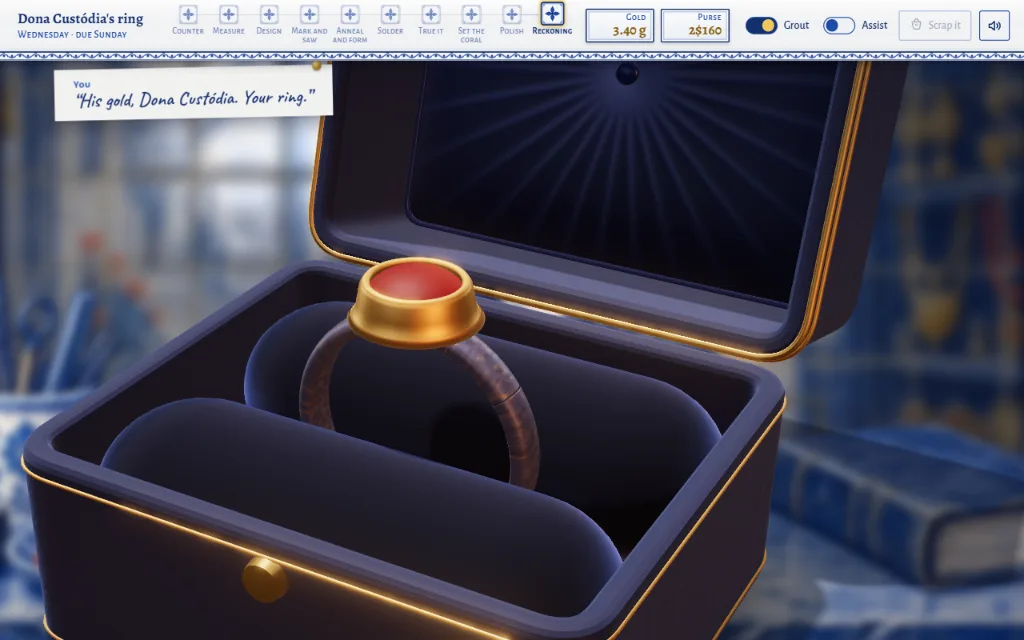
The slice as it stands: Custódia's ring, ten steps, captured today from /slice/.
Counter
| Verb | What you do | The decision | What goes wrong | Status |
|---|---|---|---|---|
| Take the commission | Talk, choose replies, read the slip | The date and price you promise | Overpromise and miss the feast | Built |
| Measure | Slide brass sizers past the knuckle (later: neck length, wrist, earlobe) | Fit the base or the knuckle | Wrong size: you resize later at your own cost | Built (ring) |
| Weigh and quote | Gold on the balance with brass weights, then metal + labour + margin | The quote | Too low loses money; too high and she walks | New |
| Touchstone | Streak the metal on black stone beside needles of 750, 800 and 916, then touch it with acid. Notch a hidden spot to look under a plating | Buy, refuse, or send it to Porto to be sure. 800 against 916 is a clear call; 750 against 800 sits at the method's 50‰ limit | Buying gilded brass as gold: a green streak in the notch gives it away | New |
| Buy, pawn and redeem | Weigh old gold, make an offer, lend against it, keep the book | The rate and the terms | A pawn never redeemed; a redeemed piece you've already melted | New |
| Reckoning | The piece on its owner, then pay, reaction and a photo | — | Refusal, a resize, no pay | Built |

Quote: Coração de Viana
In réis: 8$448. She'll count it that way.

AbílioShe watches the beam, not you. Let it settle before you say a number.
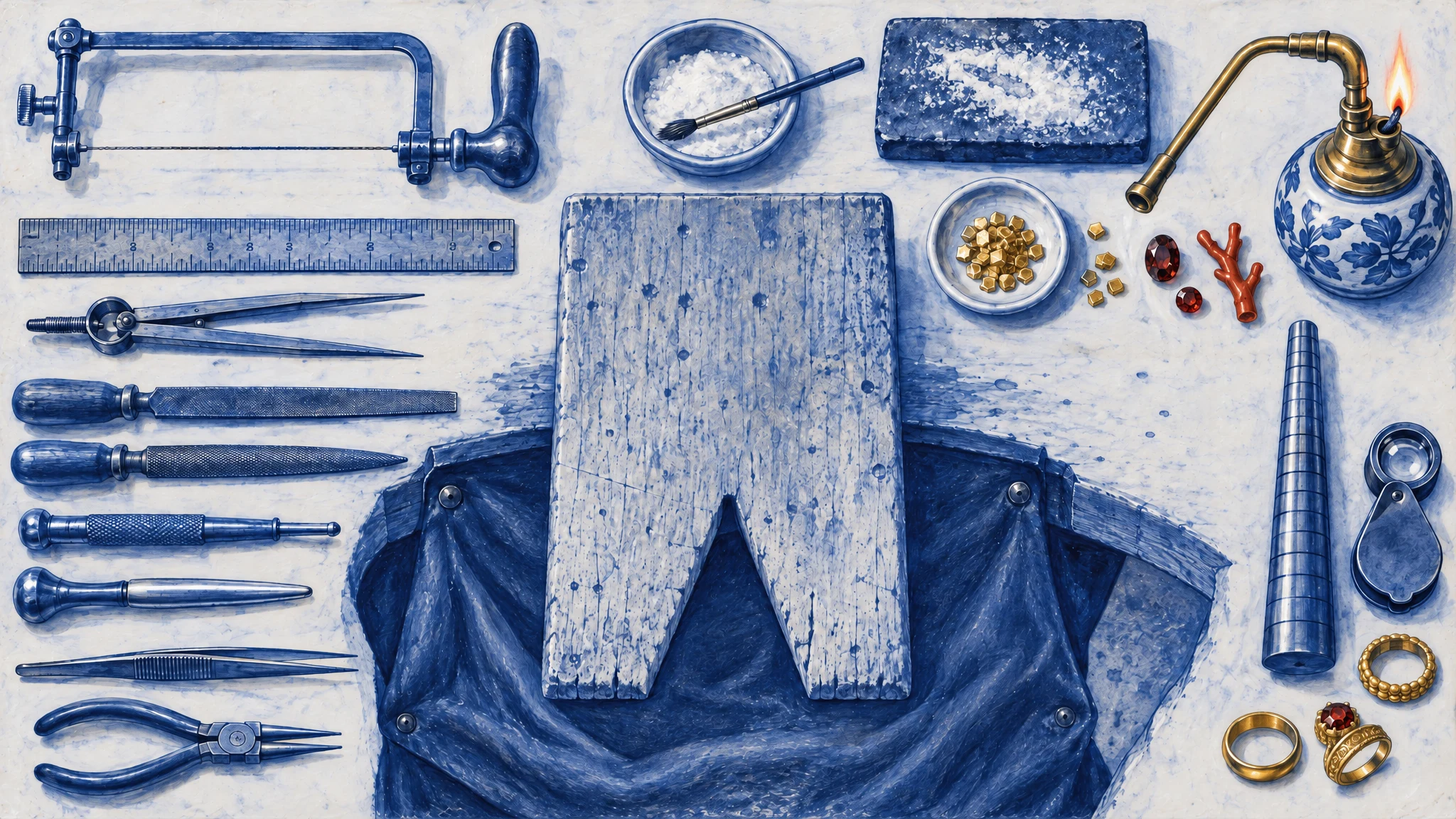

A chain from Malasartes
AbílioCut a notch where his thumb rubbed. Gilding's thinnest there.
Design desk
| Verb | What you do | Status |
|---|---|---|
| Pattern book design | Pick a frame, motifs and stones from inherited drawings. The style bars move (devotion, courtship, protection, display, mourning) and the weight is live | Partly built (band width and thickness sliders) |
| Maker's mark | Design your registered punch in the style of a fisherman's sigla | New |
| Free bench | Make anything from what you've unlocked: no customer, no cost. It was Dressmaker's most-requested missing feature | New |
Metal wall (forge, rolling mill, draw bench)
| Verb | What you do | The decision | What goes wrong | Real number | Status |
|---|---|---|---|---|---|
| Alloy and cast | Old gold, fine gold, copper and silver into the crucible, then pour the ingot | Fineness against colour against cost | A cold pour leaves pores; the wrong mix gets the wrong mark | 800‰ = 19.2k; about 900 °C crucible | New |
| Roll | Ingot through the mill, closing the gap each pass | When to anneal | Edge cracks from skipped anneals | — | New |
| Draw wire | Pull through the drawplate, hole by hole | Wax and annealing | Snaps; squeaks when dry | Certified filigree wire ≤ 0.22 mm | New |
| Twist and flatten | Twist two wires between boards, bond them, roll them flat | Turns per cm | A loose twist unravels | Bond at about 700 °C | New |
| Cuttlebone and sand cast | Flatten two halves of a cuttlebone (or pack a sand flask), press in the model, cut a funnel sprue and vents, bind with wire, pour | Sprue, vents and pour heat | Misruns and porosity; fine detail won't take | Single-use mould; pour at the lowest workable heat (Brepohl). Sand casting is Gondomar's documented method; lost wax isn't, in 1911 | New |
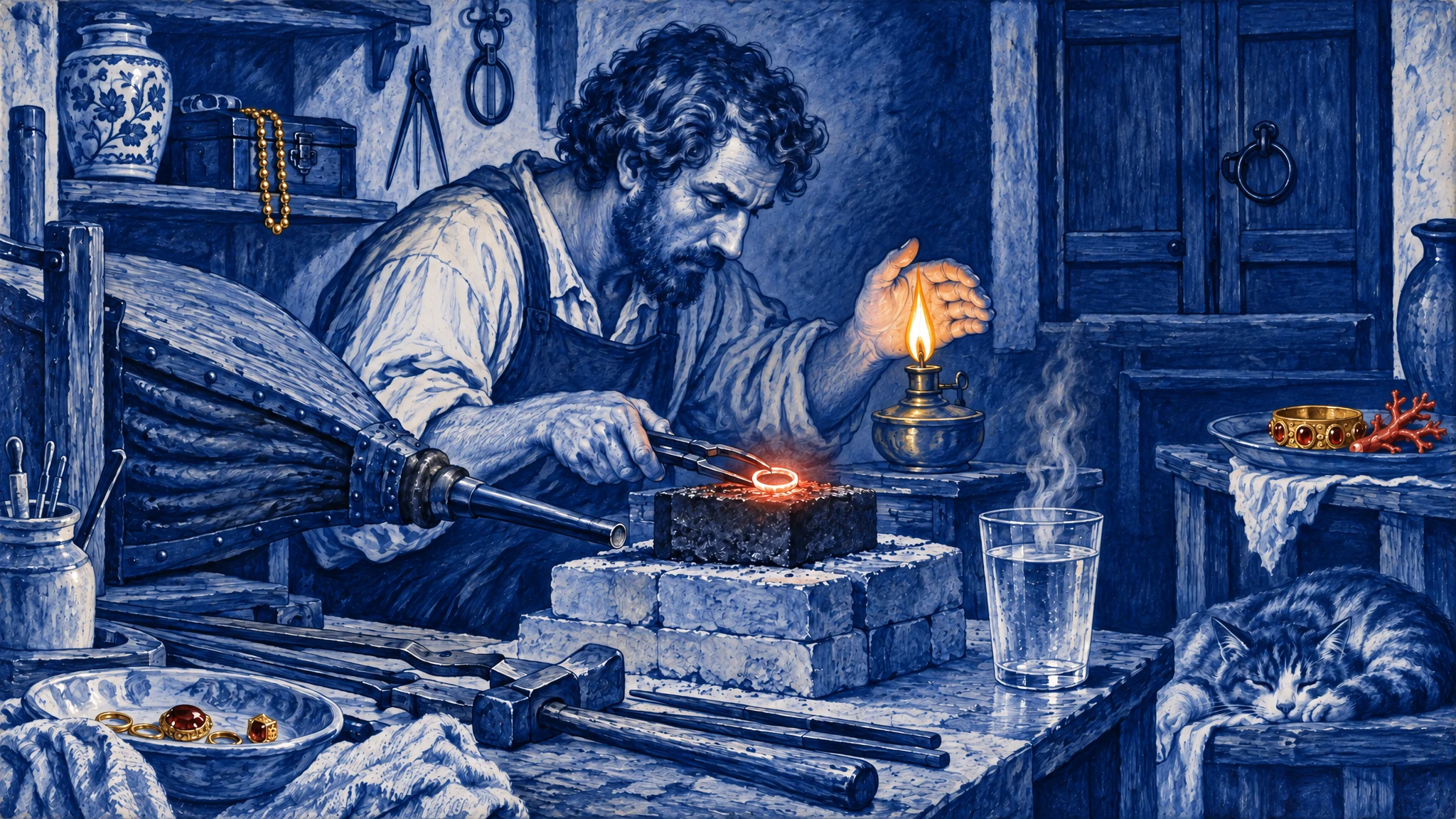
Alloy for Albina's heart
800‰ and up takes the deer's head. One gram short of fine and it's the swallow.
AbílioOld gold carries somebody's tin. Skim it, or the ingot cracks in the mill.
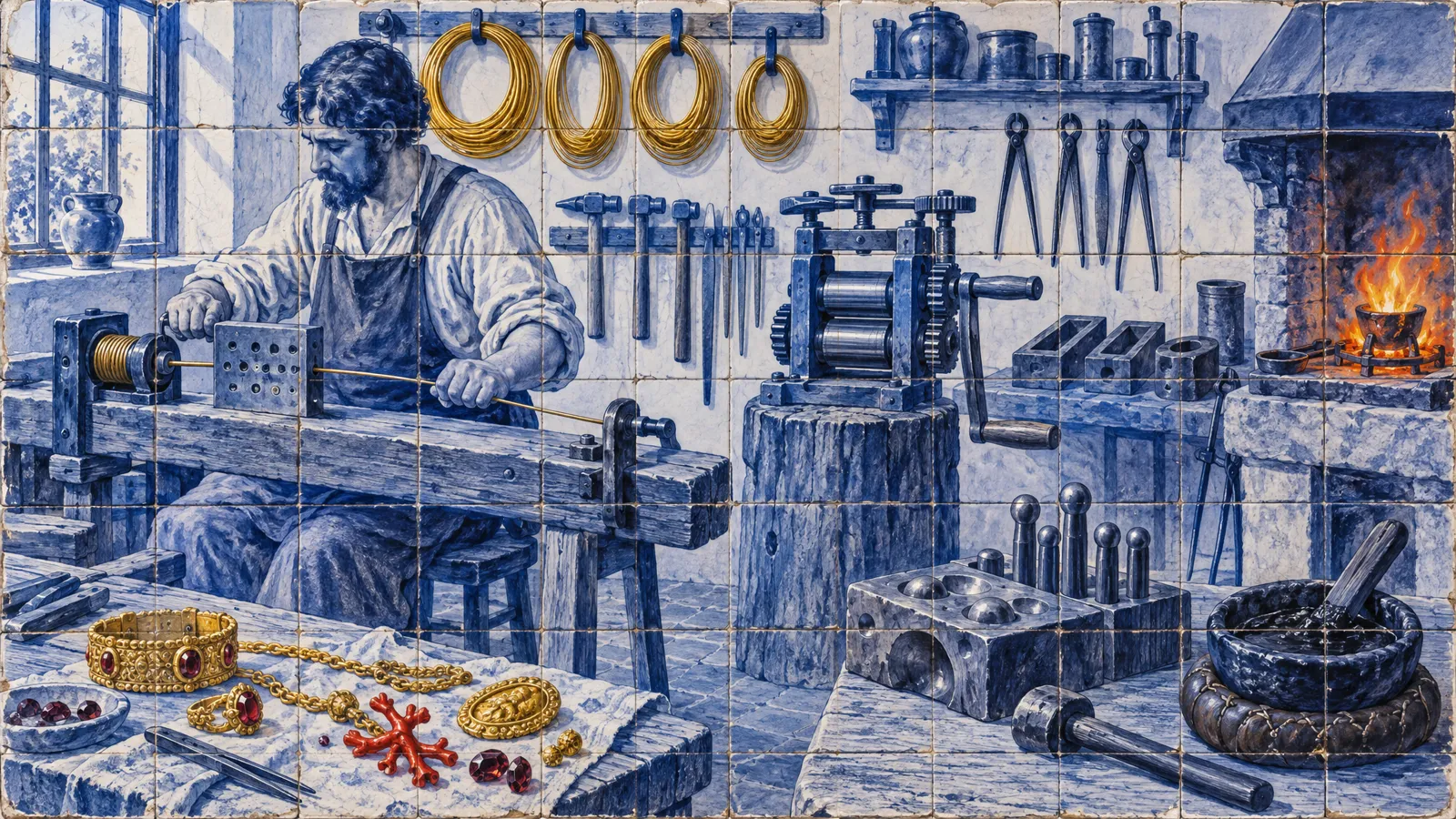
Drawplate
AbílioHear that squeak? It's dry. Wax it before it snaps.
Bench pin
| Verb | What you do | The decision | What goes wrong | Status |
|---|---|---|---|---|
| Mark and saw | Dividers, then a steady vertical stroke | Blank length: (ID + thickness) × π | The blade snaps; the cut goes crooked | Built |
| Pierce | Drill, thread the blade, saw inside lines | Path and turning | Snapping a blade inside the work | New |
| File and shape | Forward strokes only. Shape and fit imported jet figas and coral horns into their caps; jet is glued into a wide bezel, never pushed over | Where to stop | Over-filing; jet chips (it's soft and brittle); coral splits on the grain | New |
| Engrave | Push a burin letter by letter: initials, inside a ring, a reversed monogram checked with a wax proof | Depth and angle | A slip across the face; a wrong letter can't be undone; a back-to-front "S" on a seal | New |

Monogram
AbílioCut it backwards. Then press the wax and read it the right way round.
Mandrel and stake
| Verb | What you do | Status |
|---|---|---|
| Form and true | Bend the blank round, then true it on the mandrel with the mallet, flipping it because the mandrel tapers | Built |
| Dome | Disc into the dapping block, punch by punch, for beads and hearts | New |
| Chase and repoussé | Sheet set in pitch, worked with punches from the front and back (the Coca's scales, a heart's crown) | New |
Fire
| Verb | What you do | The decision | What goes wrong | Real number | Status |
|---|---|---|---|---|---|
| Anneal | Heat in the dim corner to a dull cherry, then quench | When to stop | Orange means overheated; cracks if you skip it | Silver 650 to 680 °C | Built |
| Solder | Flux, paillon, heat the piece and not the solder, watch for the flash | The order: hard, medium, easy | Balling, melting through, pitting | Silver solders 740 / 690 / 670 °C | Built |
| Pickle and whiten | Acid baths, timed | How long, and what's on the piece | Pearls and coral dissolve | 3 to 4 baths | New |
| Granulate | Ball snippets in charcoal, place the grains, fuse them | Pattern and heat | Grains melt into the sheet | — | New |
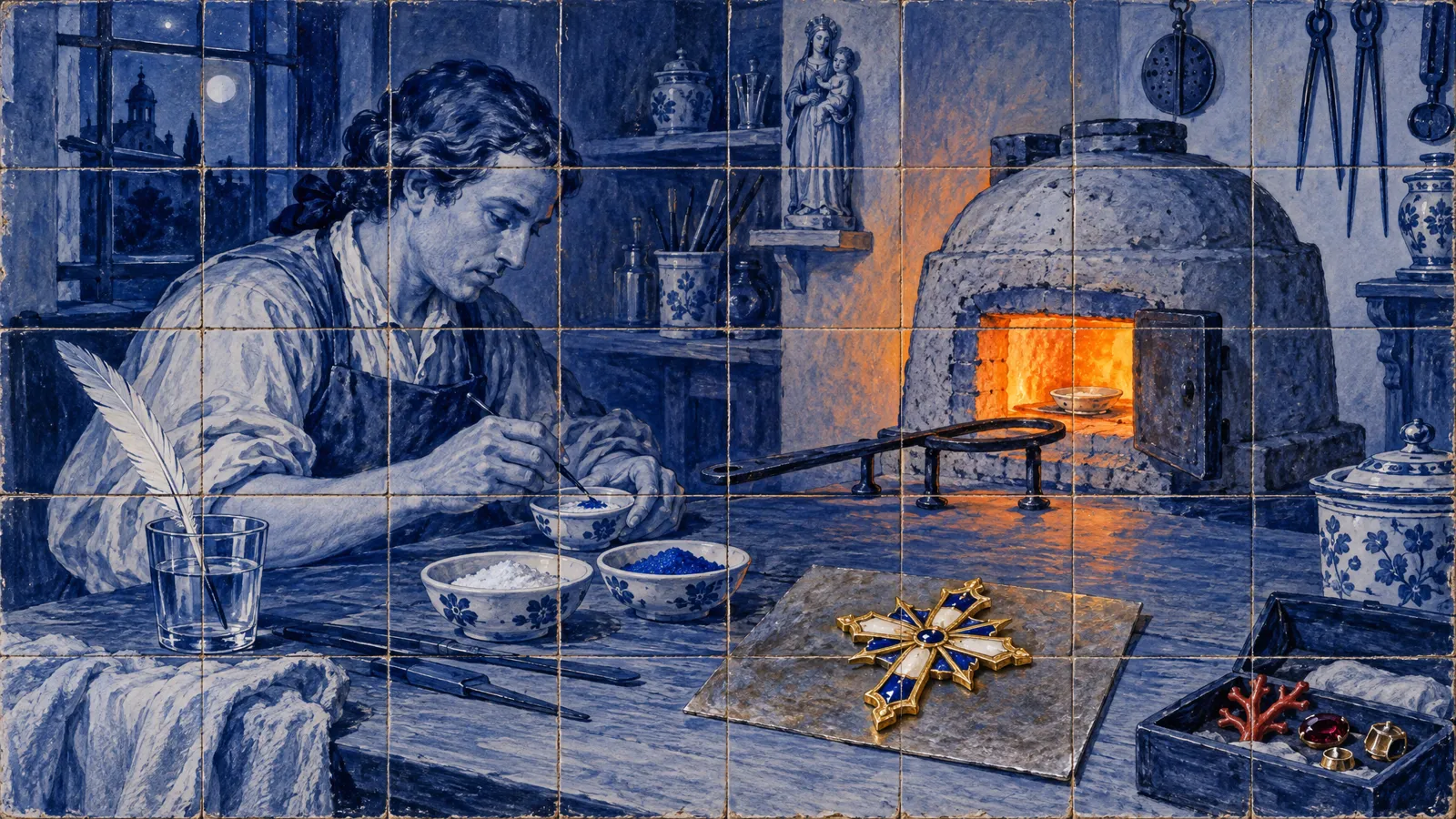
| Enamel | Pack wet glass powder into cells and fire it in the muffle | Firing order | Cracks; no soldering afterwards | 700 to 900 °C | New |
| Platinum torch | The same fire verbs on the oxy-gas torch, through dark glass | Hold bright orange for the anneal; read the solder, not the colour, to join | A gold-dusted file or a trace of lead ruins the metal, and only refining saves it; acetylene's carbon; a diamond left in the setting | About 1,768 °C | New |
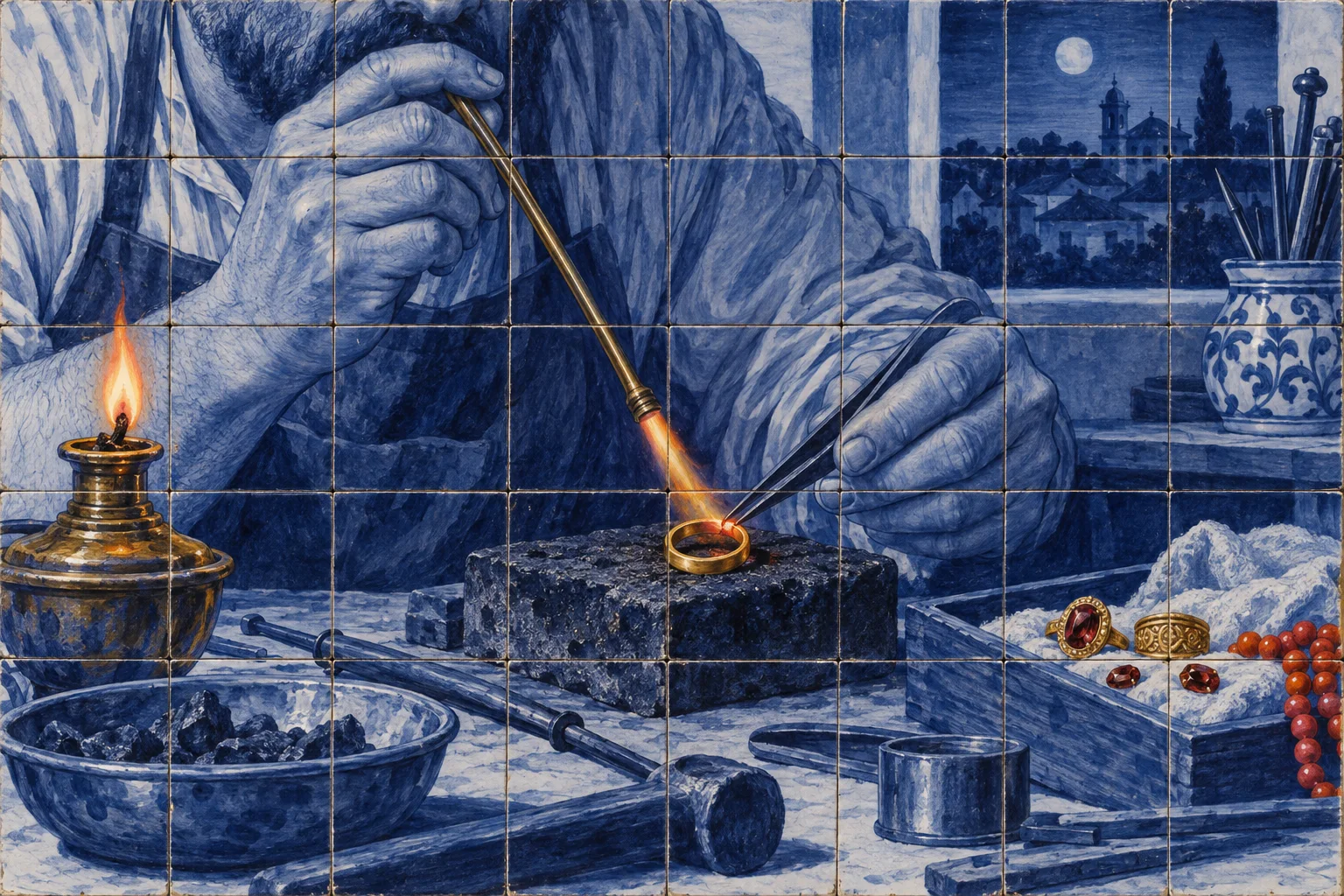
Zulmira's garland brooch
No colour to read up here. The solder is the thermometer.
AbílioI can't help you with this one. I've never heard it.
Enamel
No soldering after the first firing.
AbílioWhen the hiss stops, count to ten. Then out.
Filigree board
| Verb | What you do | Status |
|---|---|---|
| Build the frame | Bend the outline from heavier wire and solder the skeleton | New |
| Fill the frame | Coil flattened twist into scrolls, spirals and rodilhões, and pack every cell until each coil touches its neighbours and the frame. Motifs are "always sinuous, without right angles" | Mocked in the pitch |
| Powder solder | Wet the piece, dust on powdered solder, fire the whole thing evenly | New |
| Join halves | Two domed halves become a hollow bead (conta) or a 3D heart | New |
Coils
Rodilhão · S-scroll · scale

GracindaThe red one by the point is loose. It'll fall out in the fire.
Stones
| Verb | What you do | Status |
|---|---|---|
| Bezel | Push north, south, east, west, then the corners, then burnish | Built |
| Prong | Cut seats no deeper than a third of the prong, bend the prongs over in opposing pairs, round the tips | New |
| Flush and millegrain | Drill and seat a flush stone; raise tiny beads along an edge (platinum tier) | New |
| String and knot | String contas bead by bead; knot between pearls | New |
Finishing
| Verb | What you do | Status |
|---|---|---|
| Polish | Files, emery, tripoli, rouge, each stage removing the last one's scratches | Built |
| Brush and burnish | A brass brush for satin and for filigree (which can't be buffed); burnish edges bright | Partly built (burnishing in Set) |
| Patina | Liver of sulphur, on silver only: pull the piece out at the colour you want (gold, magenta, peacock, black). Folk gold is never patinated | New |
Chain
| Verb | What you do | Status |
|---|---|---|
| Make chain | Wind wire on a mandrel, saw the coil into rings, open each one sideways, thread and close it, then solder it or not. A cordão runs two metres or more, worn in four turns, with pear-shaped links that hide the join; in Gondomar, women called engatadeiras hooked the links at home (Mota). Soldered links are the quality tier: stronger, and dearer. It's a long, calm job that can go out to the engatadeiras or the apprentice | New |
Stones
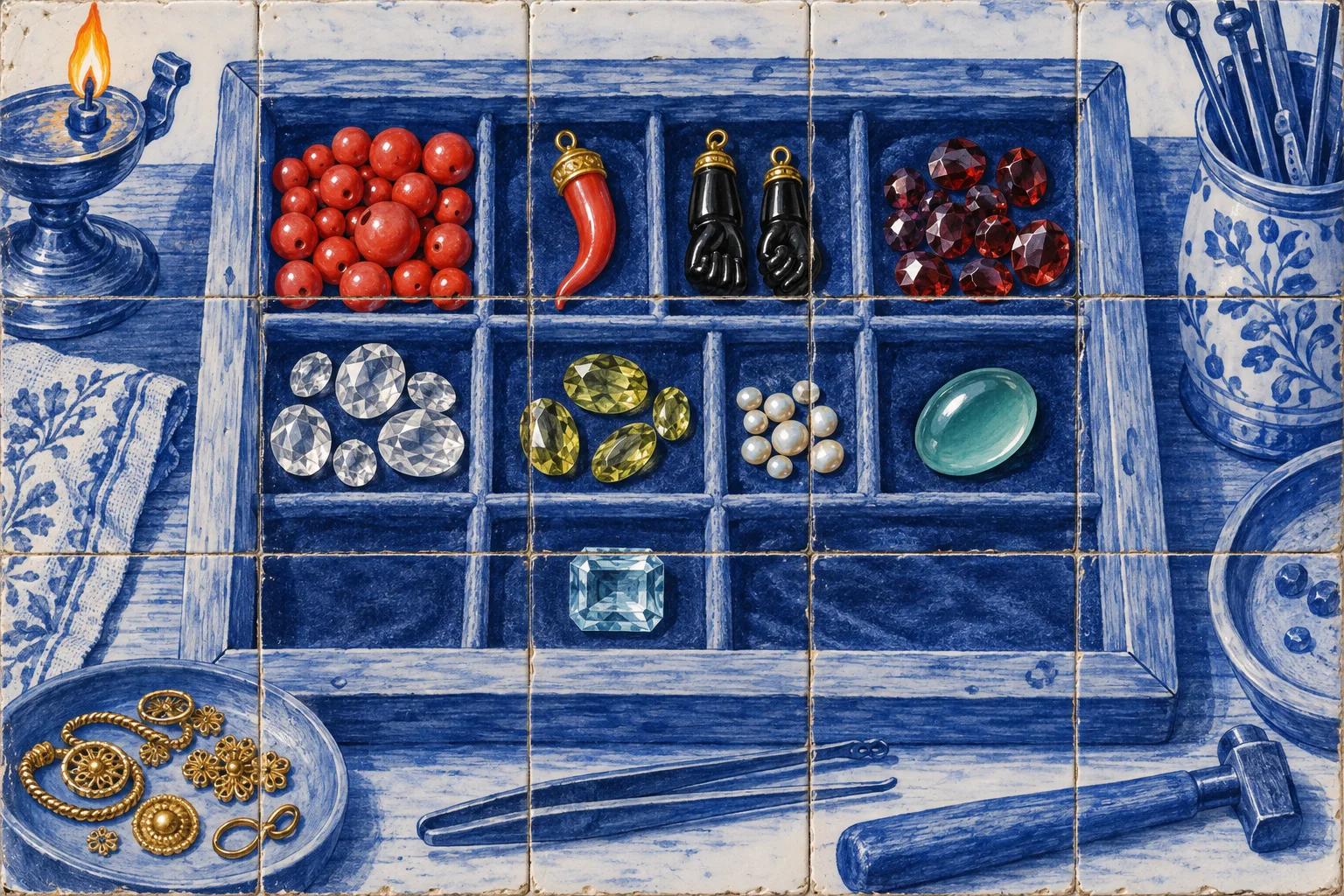
| Stone | Takes the torch | Takes the acid | Used for | When |
|---|---|---|---|---|
| Garnet | Mostly | Yes | Cheap reds, rose-cut or cabochon | January on |
| Glass paste | Cracks | Yes | The usual Minho "stone": coloured glass and imitations, with no precious stones in folk gold (Mota). A stone replacement means matching glass | January on |
| Red coral | No | No | Custódia's ring, horns, anti-evil-eye. Bought as finished Italian amulets to mount, not carved at the bench | January on |
| Jet | No (it burns) | — | Figas. Old stock from Galician or Asturian pedlars: Santiago's jet carvers were gone by the early 1900s | May |
| Seed pearls (aljôfar) | No | No (it dissolves them) | Strung, knotted, set last | July on |
| "Minas novas" (rock crystal or white topaz) | Topaz no; quartz risky | — | Diamond stand-ins | July on |
| Crisólita (chrysoberyl) | Mostly | — | Heirlooms to repair, not new stock | Repairs |
| Enamel | Fired, then never resoldered hot | — | The Cruz de Malta's white and blue | November |
| Rose-cut diamond | At gold heat, yes; never in the setting at platinum heat | Yes | The platinum tier. They come only through Porto | October on |
The pieces
Each is a procedural model with its own recipe (frame, coils, stones, alloy, dimensions, finish) that every technique can act on. The piece model is the cost people underestimate: there are 28 of them.
| Family | Pieces | Verbs that matter most |
|---|---|---|
| Rings (7) | Band; signet with a reversed seal; bezel ring; prong ring; name ring (engraved inside); a ring for a holed hand (split shank); wedding pair | Saw, form, solder, set, engrave |
| Pendants and medals (8) | São Bento medal; libra mount; meia-lua; figa (jet, capped); Coração de Viana; borboleta; Cruz de Malta (enamel); relicário (hinged locket) | Filigree, dome, chase, enamel, file and shape |
| Earrings (3) | Arrecadas; brincos à rainha; the Coca's hoops | Filigree, dome, solder |
| Beads and chains (4) | Contas (hollow beads); cordão; trancelim; grilhão | Dome, join, chain, string |
| Folklore objects and repairs (4) | The moura's comb; the Tear de Ouro shuttle; Agostinho's processional cross; a church monstrance | Repair rules, saw, solder |
| Platinum (2) | Garland brooch with diamonds and millegrain; a platinum ring | Platinum torch, prong, millegrain |
The year, month by month
The dates are 1911's. Corpus Christi fell on 15 June 1911, because Easter was 16 April (inferred from the calendar). Two real events of the year run through it: the Law of Separation of Church and State (20 April) and the escudo (22 May). Both are in 1911 facts.
| Month | Feast | You learn | Story | Folklore | Money |
|---|---|---|---|---|---|
| January | Janeiras, Reis | Measure, saw, anneal, form, solder, bezel, polish, pickle. Copper, silver, 800‰ | Custódia's ring (the slice). Repairs. Abílio's first instalment | The Fradinho steals paillons | Thin: repairs and remakes |
| February | Entrudo (Carnival) | Weigh and quote, touchstone, buy and pawn, alloy and cast, roll | Hard months, so gold comes in to be sold. Laurinda puts down for her first bead. Albina's chain | Malasartes pays in gilded brass | Cheap stock from old gold; the pawn book fills |
| March | Lent | Draw wire, twist, build the frame, fill (silver), powder solder | Gracinda teaches filigree. The Fradinho wants a ring for a holed hand | — | Low; enchedeira wages start |
| April | Holy Week, Easter (16 April) | Engrave (initials), pierce, chain basics | The Law of Separation lands on 20 April: church gold becomes State property, to be listed parish by parish, and can't be sold. Padre Firmino wants the monstrance mended before the commission comes; the parish board pays. Reliquary lockets | Malasartes wants a truth ring | Church work |
| May | The Maias (1 May) | File and shape (jet, coral), dome, join halves, string. The escudo is decreed on 22 May: the ledger changes notation, the coins in people's hands don't | Custódia's figas and horns in bulk. Laurinda's beads. Dona Aurora's pin, and her lesson on the new money | — | Bulk trade |
| June | Santo António (13), Corpo de Deus (15), São João (23 to 24), São Pedro (29) | 800‰ filigree hoops; repair near old joints; the 916‰ tier | The Coca's earrings (due 15 June). Rosa's São Bento medal. Ermelinda's sea medal | The Coca; the moura's comb (paid in coal); the witch at the crossroads | The year's supernatural peak |
| July | Harvest | Prong setting, coloured golds, granulation | The legionary's name ring. Américo and Zulmira back from Brazil: coins to mount, a watch chain. The inventory commission lists the church gold, your mended monstrance with it; from 1 July the padre can't wear his cassock in the street. Stock for the romaria; hire enchedeiras | The legionary | You spend before you earn |
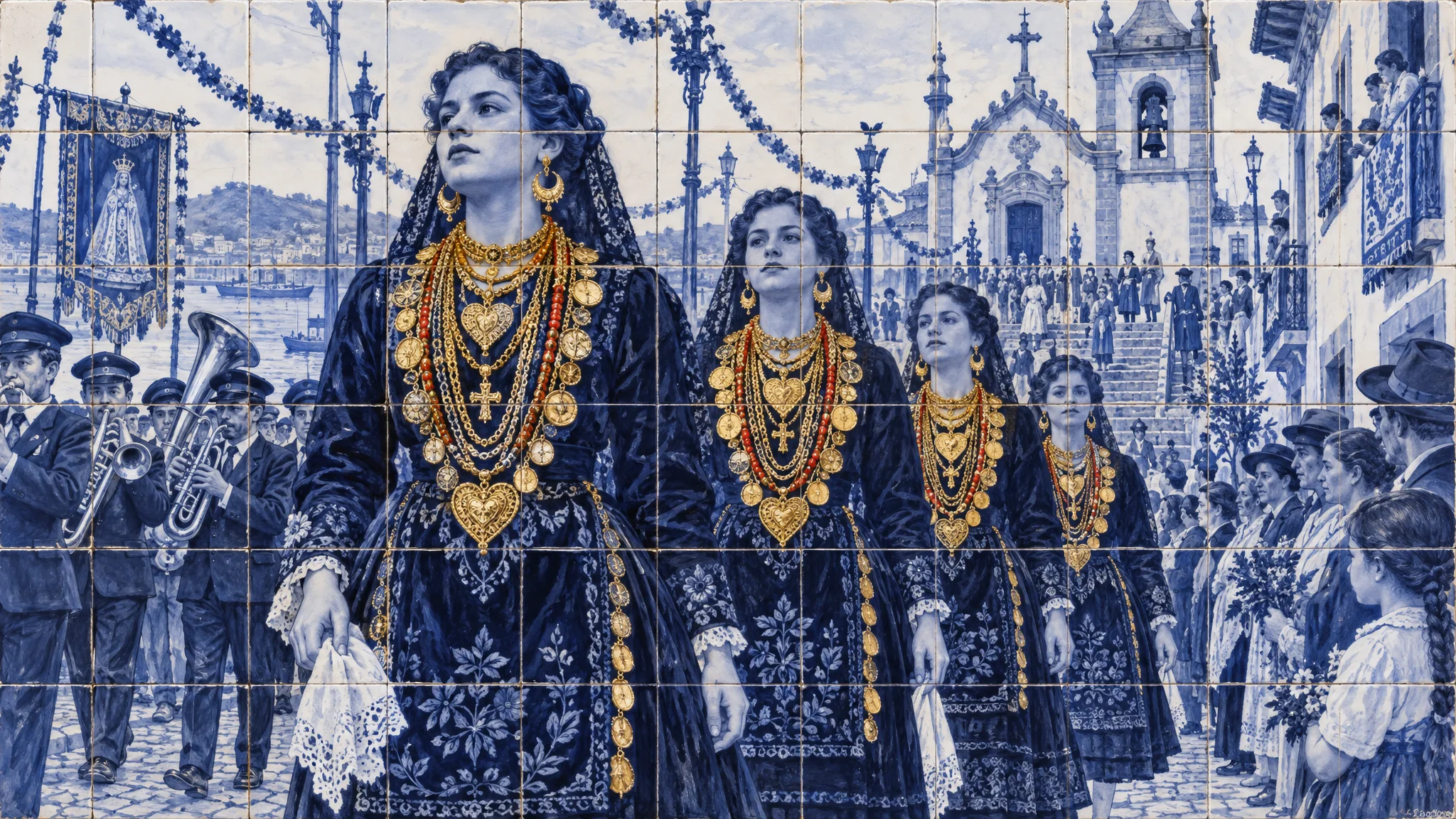
| August | Senhora d'Agonia, Viana | Chain (cordão), brush and burnish, display | The climax: Deolinda's mordoma gold, Albina's Coração de Viana, Laurinda's necklace (if she saved), your stall against Sebastião's. The saints' litters are dressed in cordões from head to foot, so families lend gold and you clean it | The Tear de Ouro shuttle (no stopping) | The biggest month |
| September | Feiras Novas, Ponte de Lima; the grape harvest | Cuttlebone and sand casting; touchstone at the fair; a reversed monogram | Sebastião's sand-cast "filigree". Gaspar's letter from Porto: a client wants platinum. Dona Glória's sea pendant | Malasartes sells you the moura's swapped gold | Fair sales |
| October | The desfolhada | Platinum-topped gold on your own flame: brazing platinum over gold, prongs and millegrain, rose-cut diamonds | Engagements: Rosalina and Serafim. The romance beat (the red ear) | Adelino runs the werewolf's road | Platinum is dear: about 2.1 times gold |
| November | All Saints, São Martinho | Enamel (Cruz de Malta), patina, a hairwork locket | Ermelinda's mourning locket. Joaquina's wedding ring, bought back out of your own pawn book | The procession of souls: Agostinho's cross, Joaquina's ring | Quiet; pawns forfeit |
| December | Christmas Eve (witch night), the Consoada | All platinum on Gaspar's torch, through dark glass, on a clean bench. The masterpiece; the apprentice | Zulmira's platinum brooch, due before Christmas. Rosalina's wedding (in black) and the three-vintém coin. The last instalment. Abílio's old drawing, made at last | The witch returns | Paying off the shop |
The cast
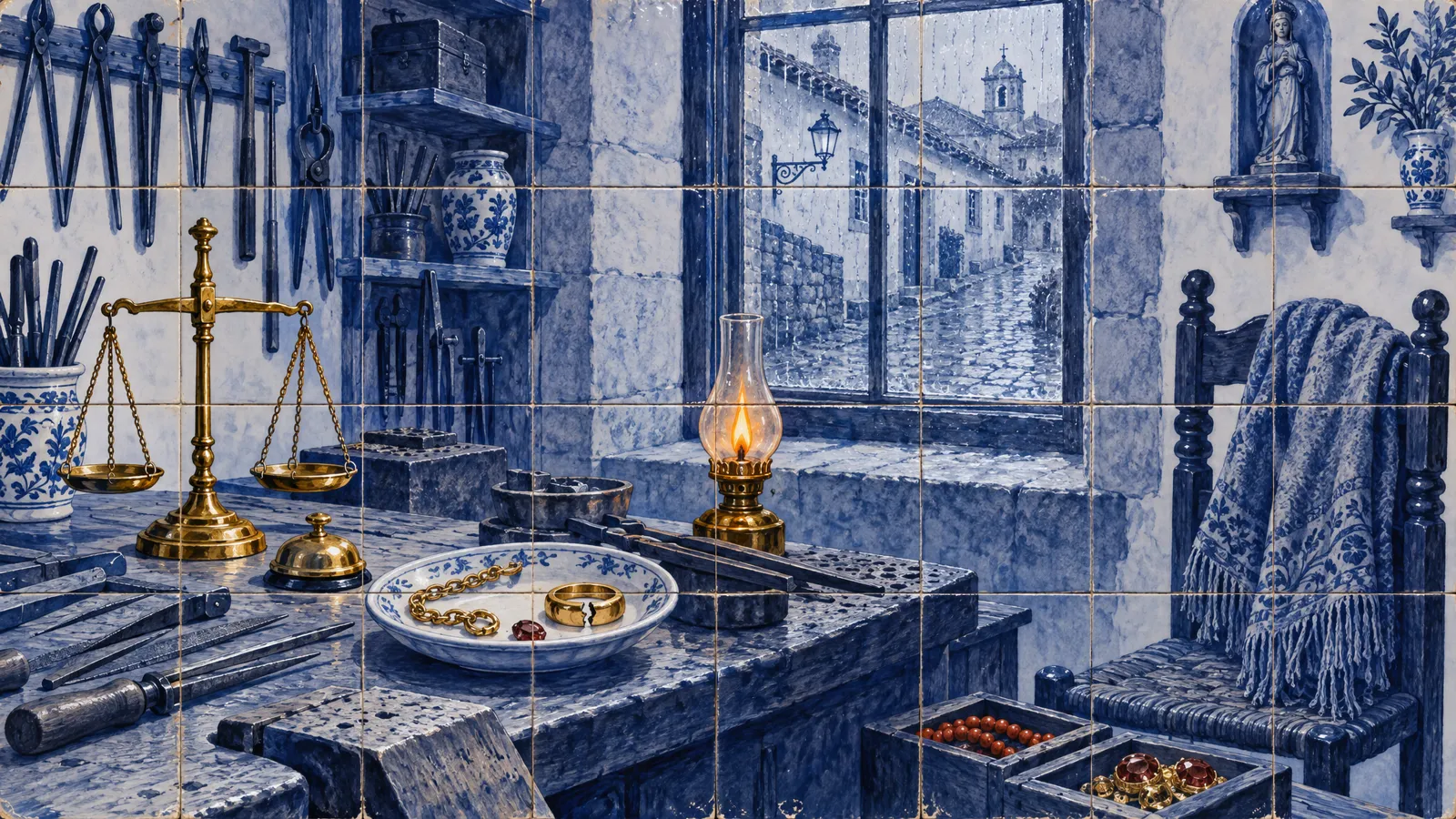
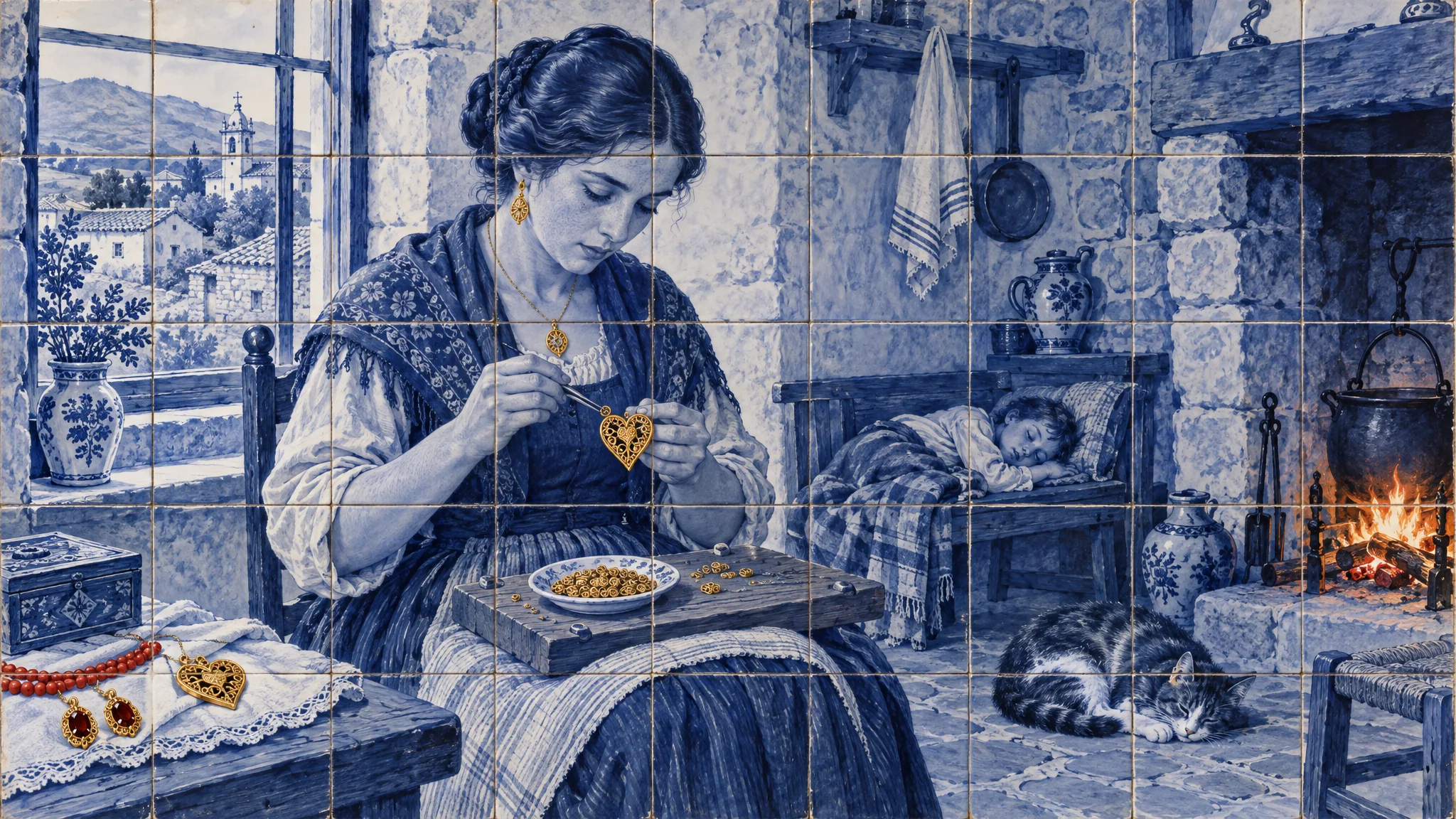
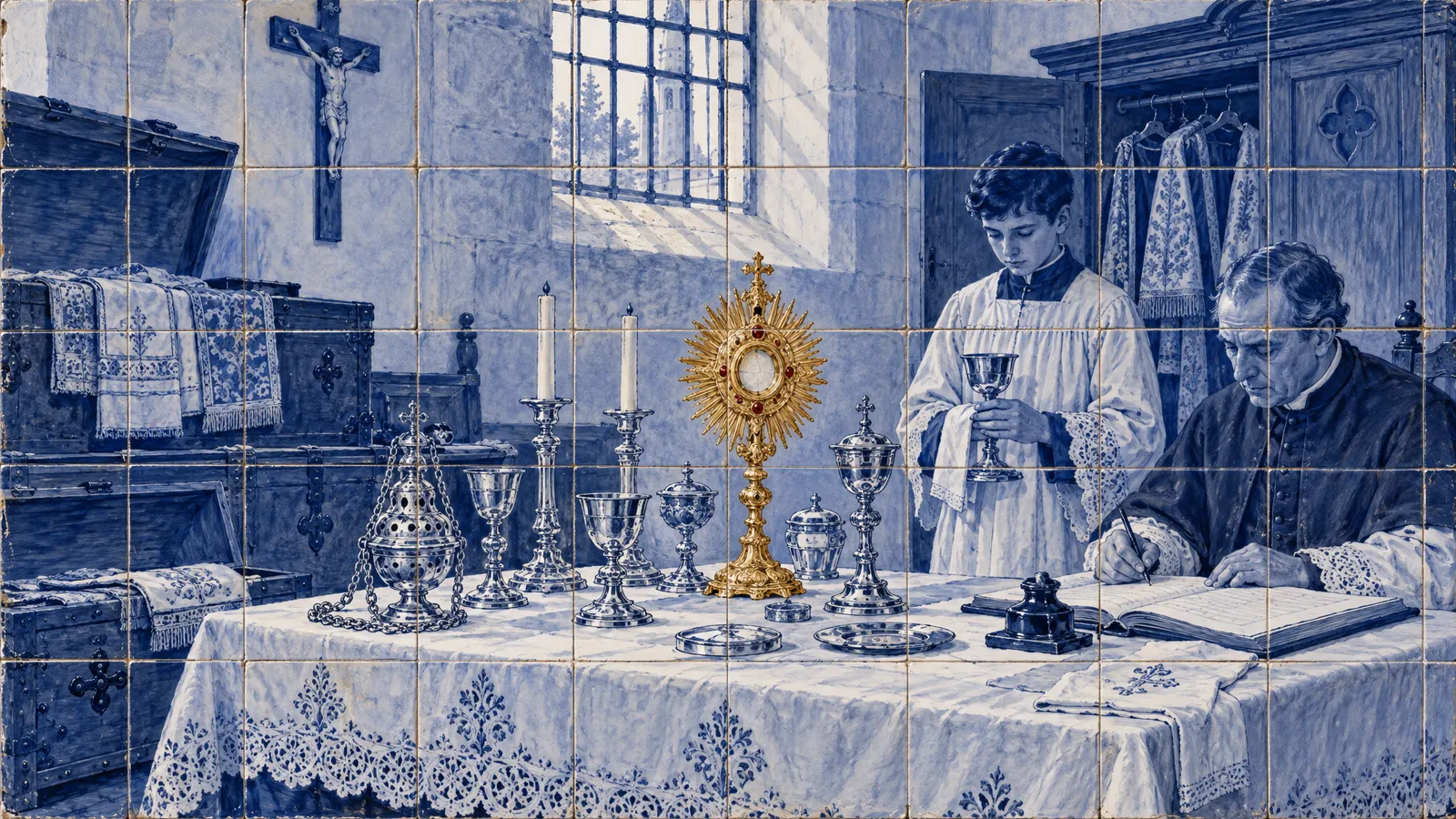
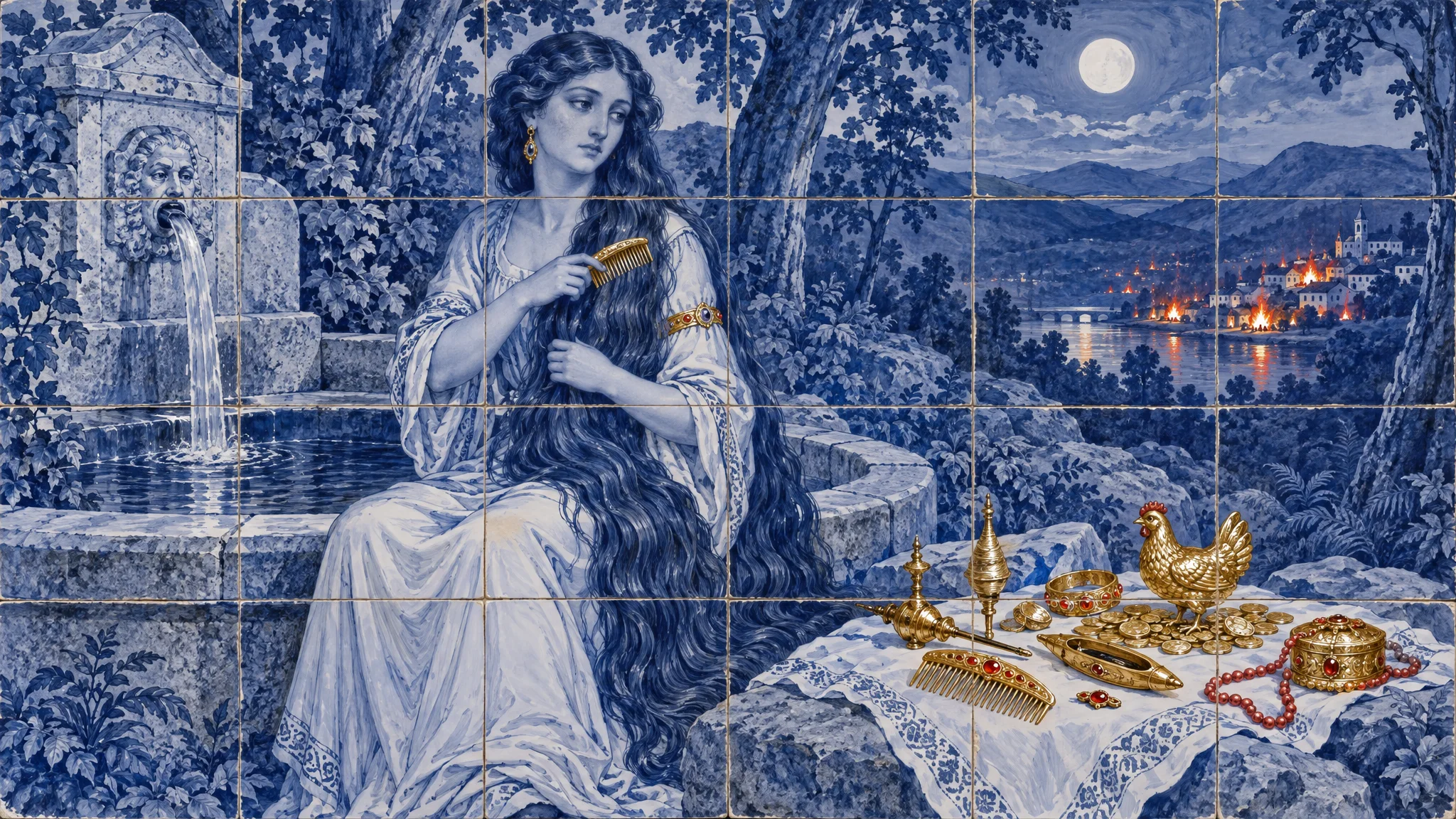
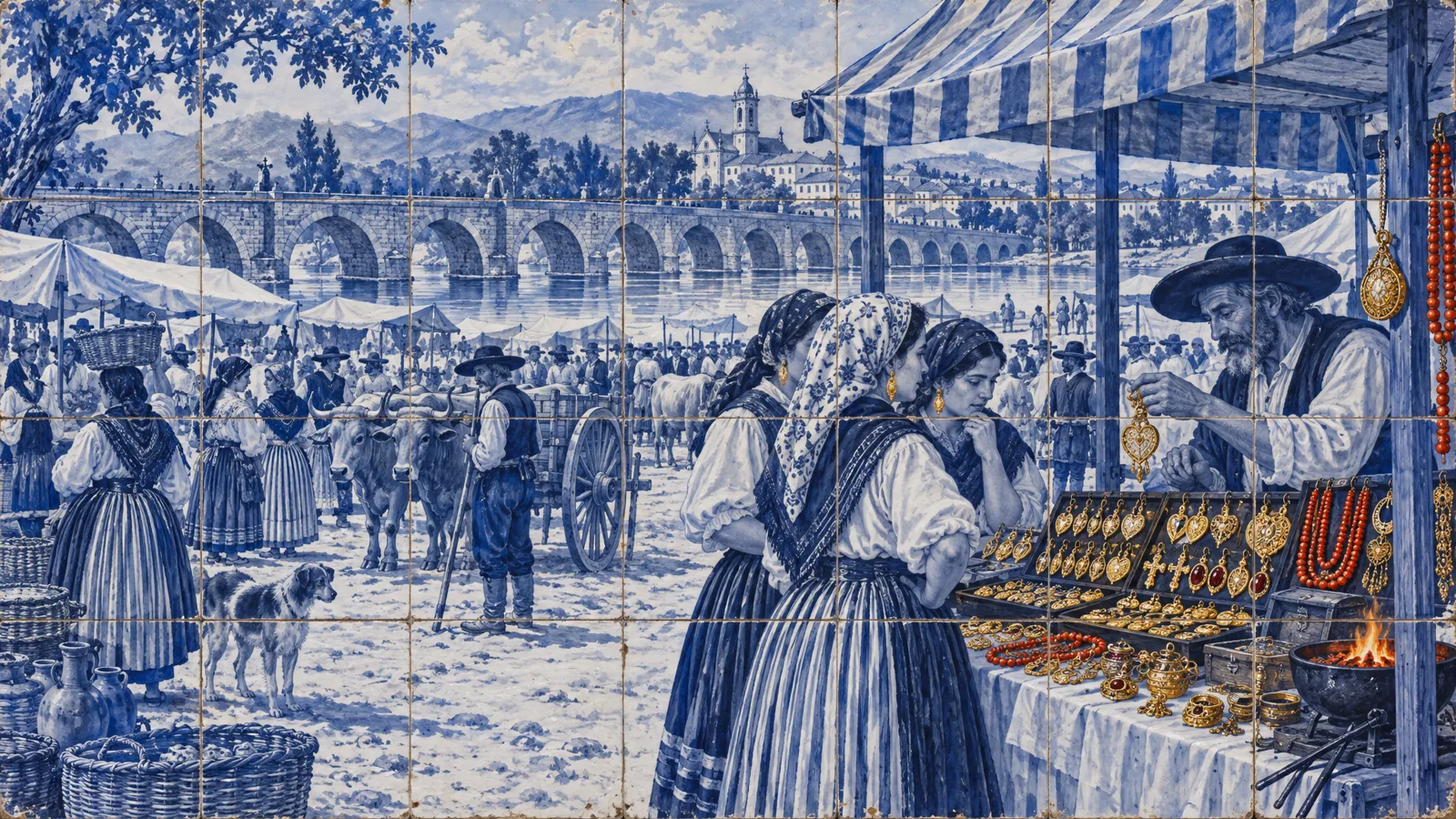
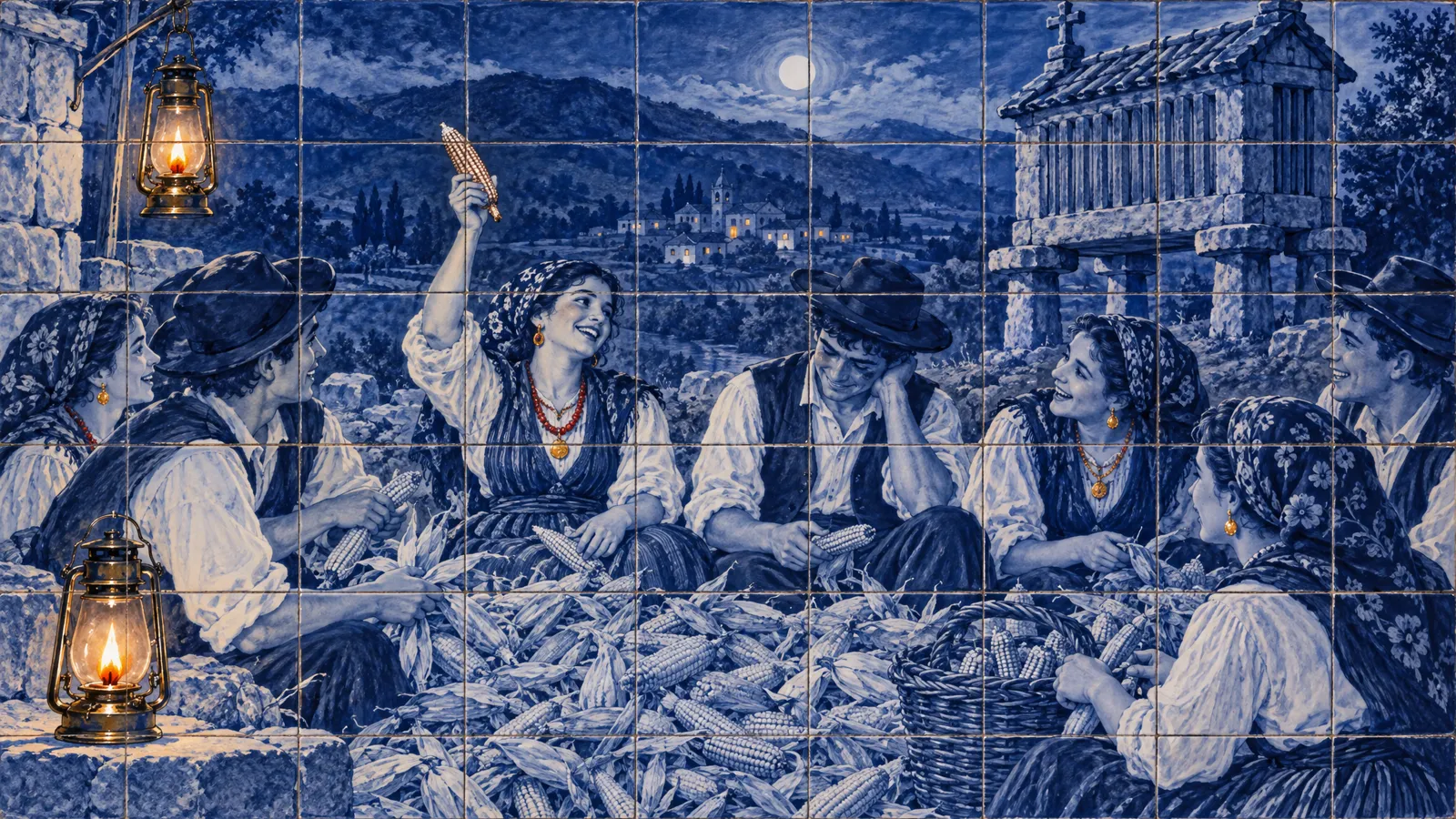
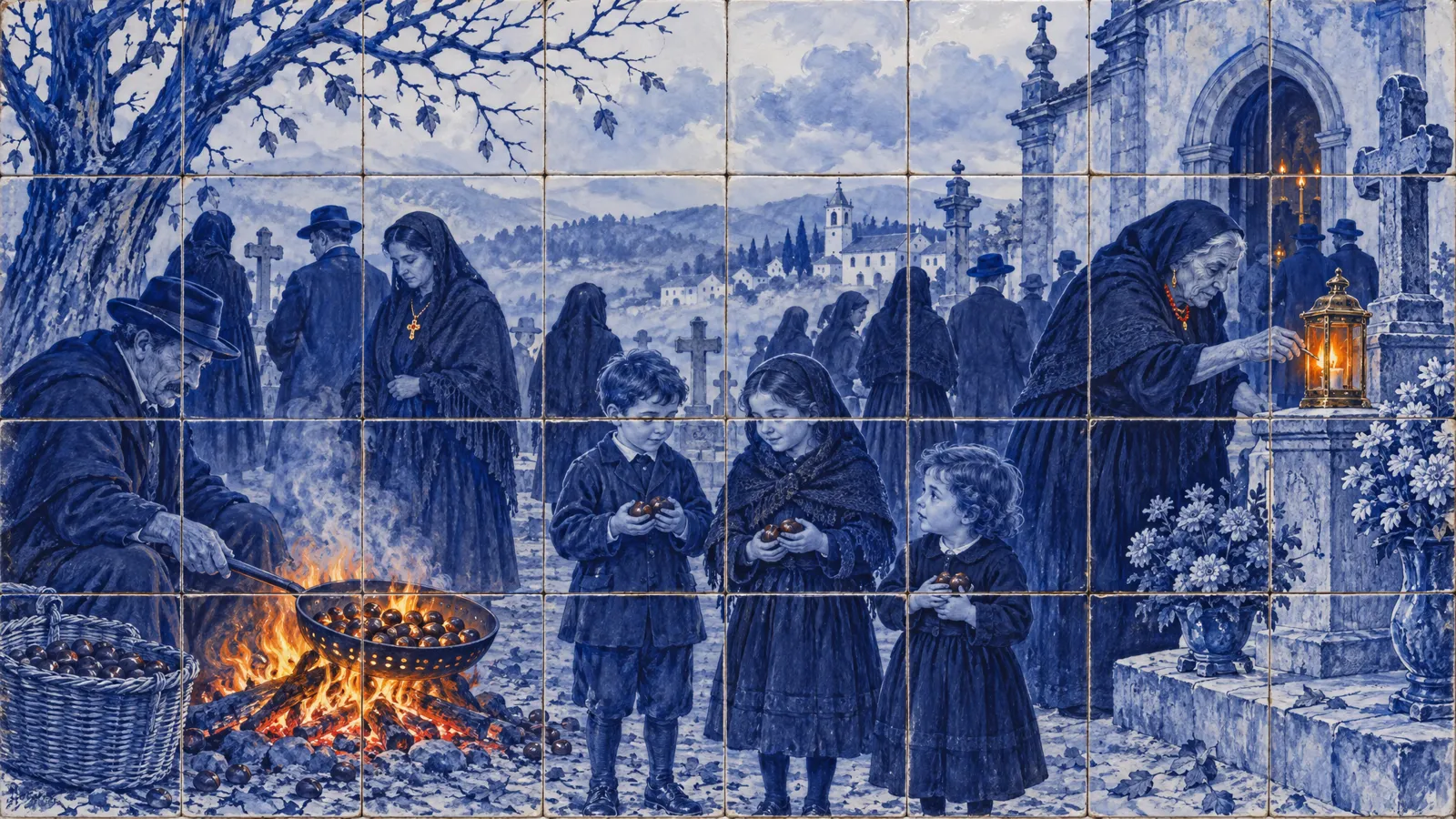
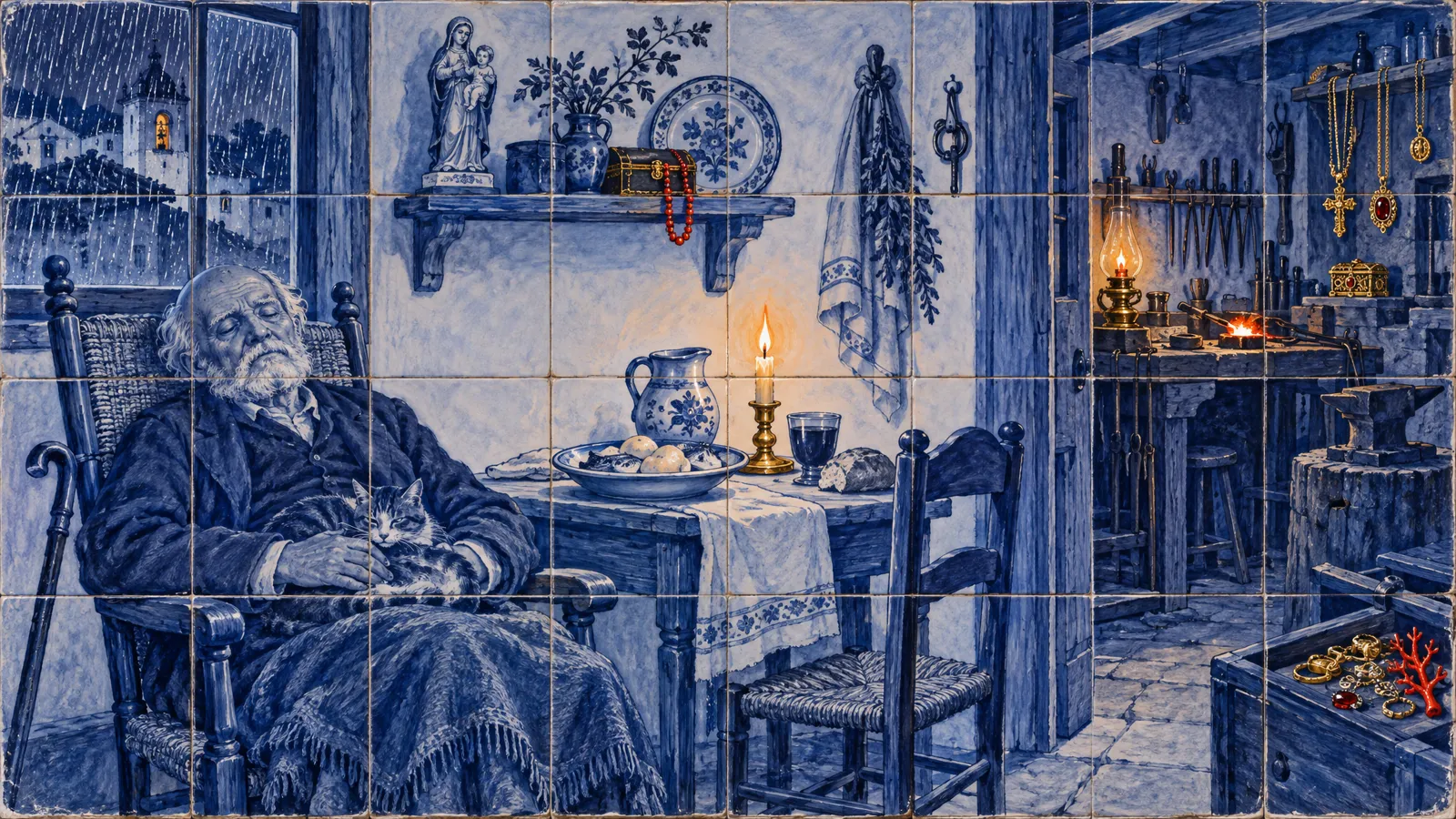
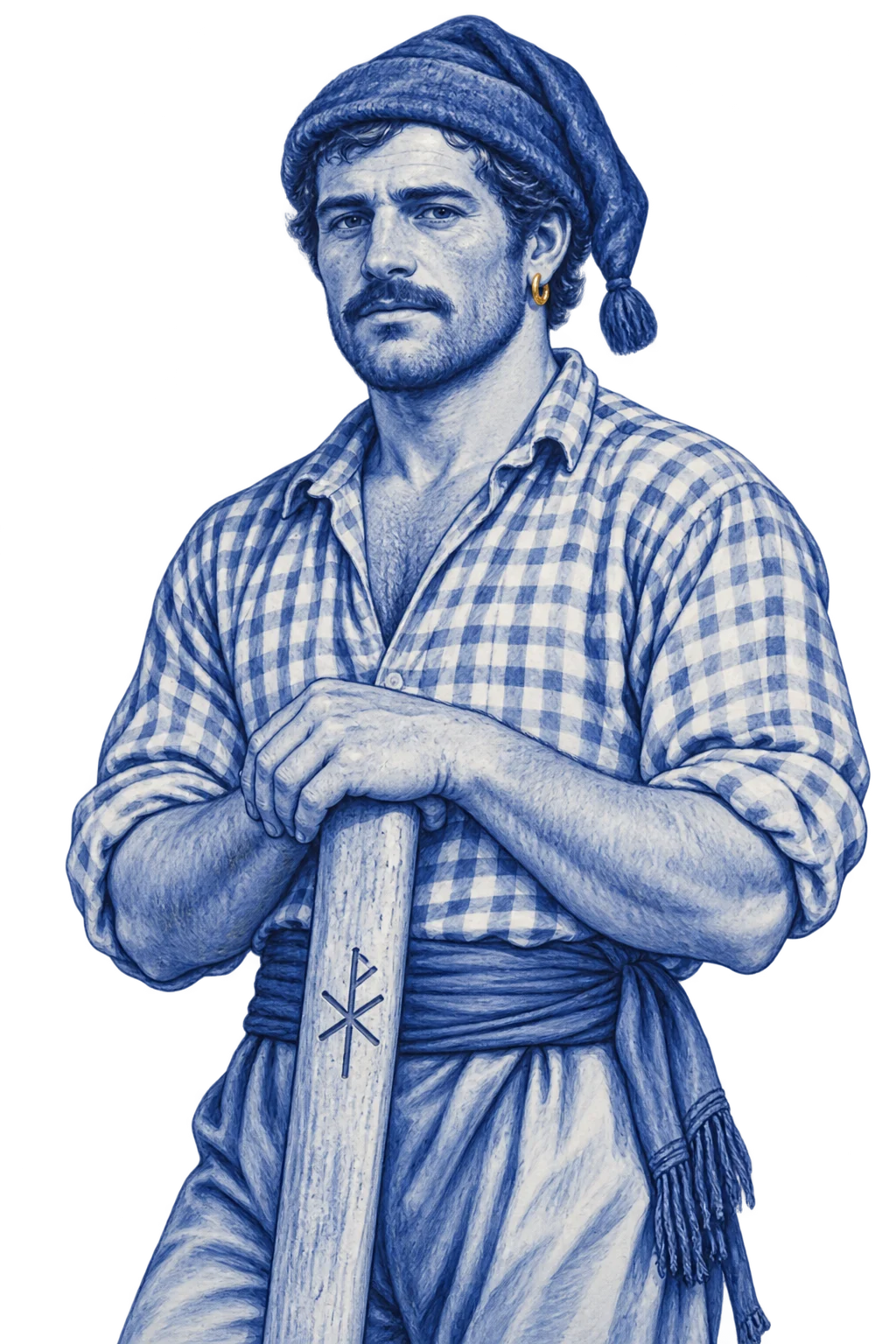
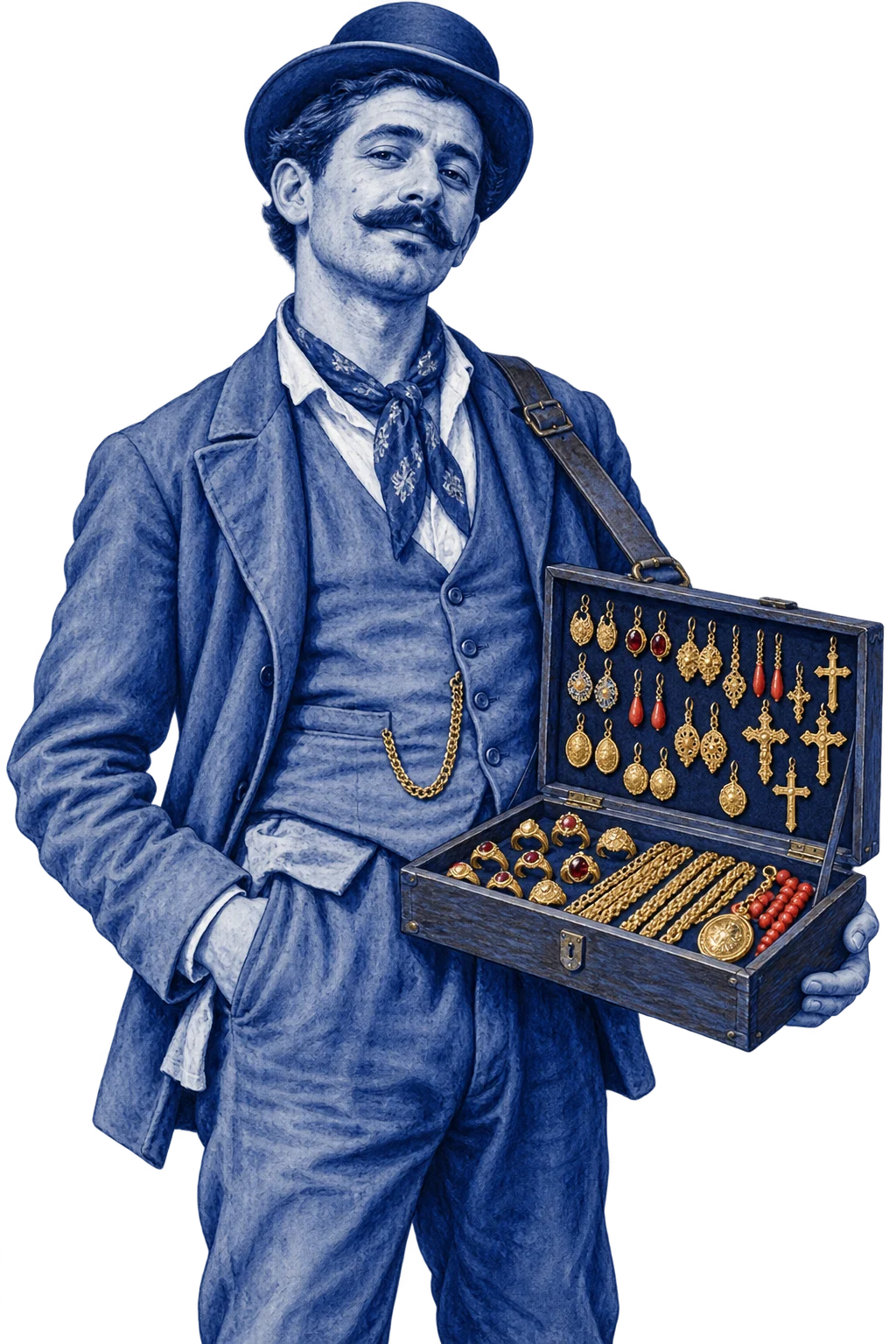
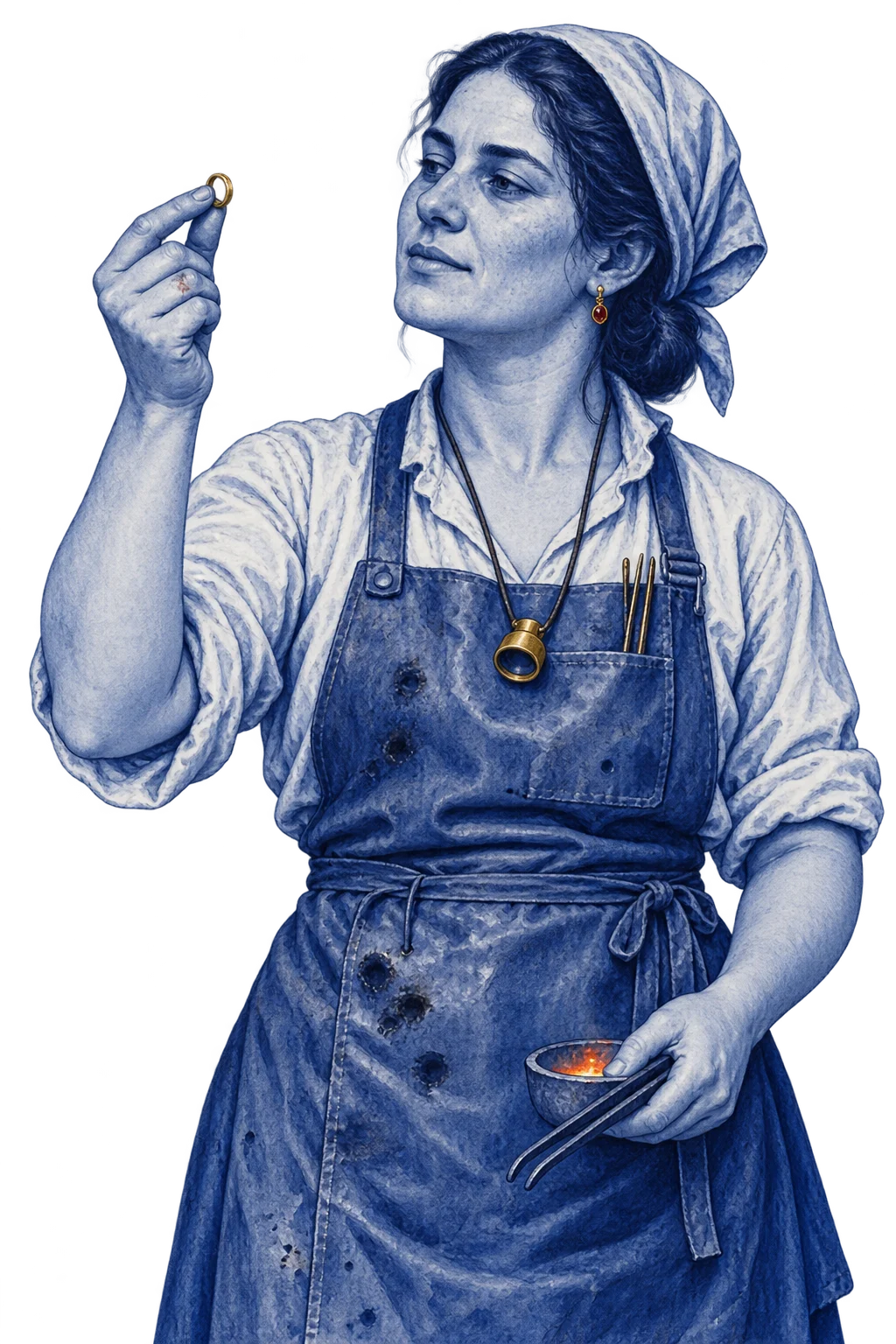
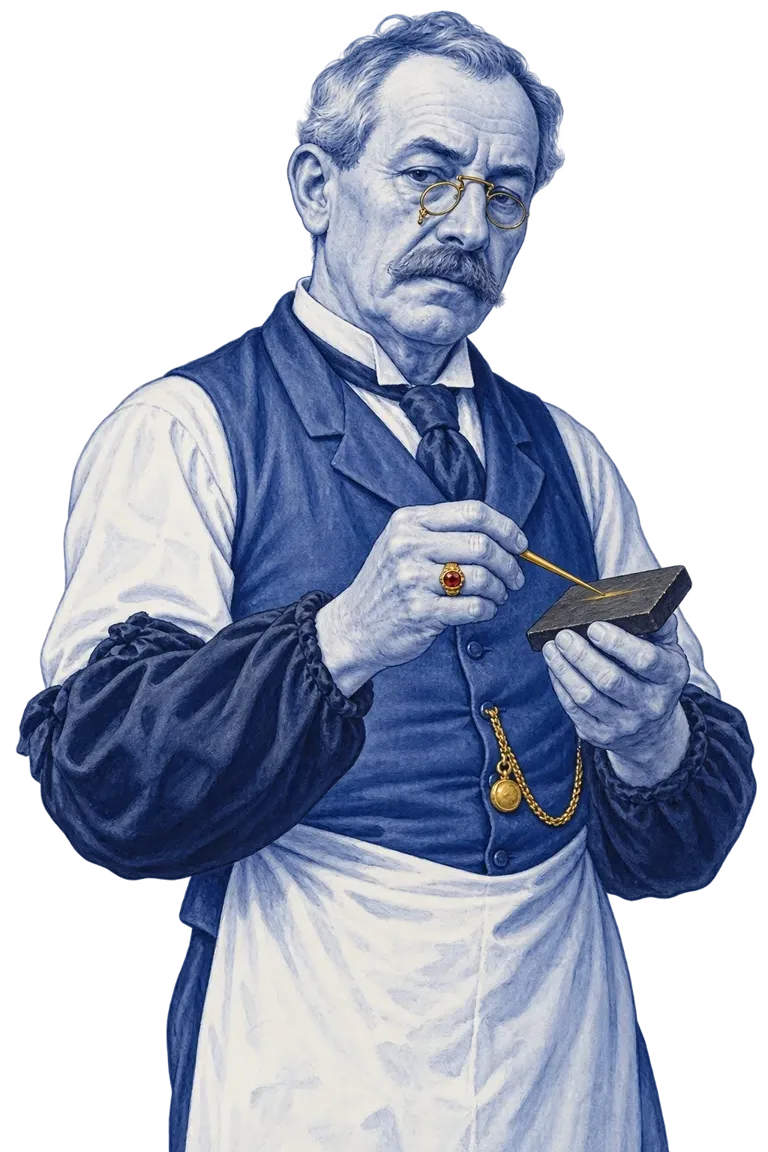
The townspeople are people. The others come from Minho and Galician folklore. Portraits marked pitch exist already. Those marked today were generated today as concept art. Walk-ins need simple portraits later.














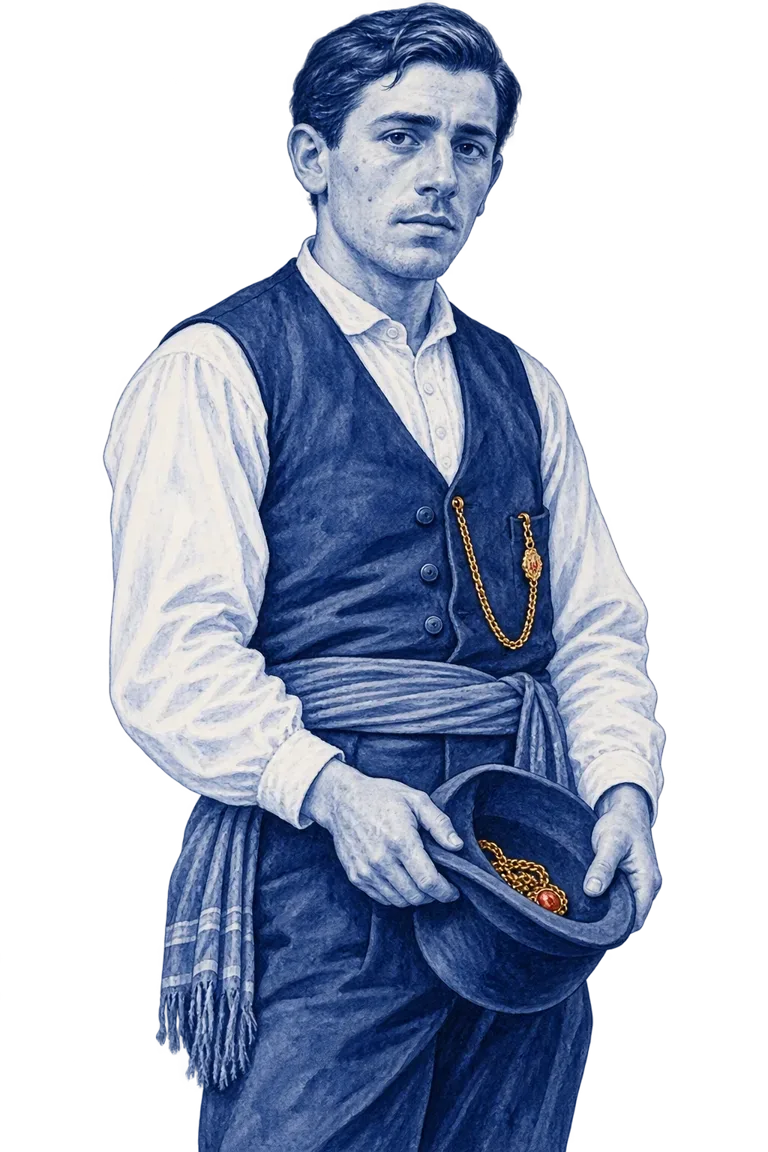



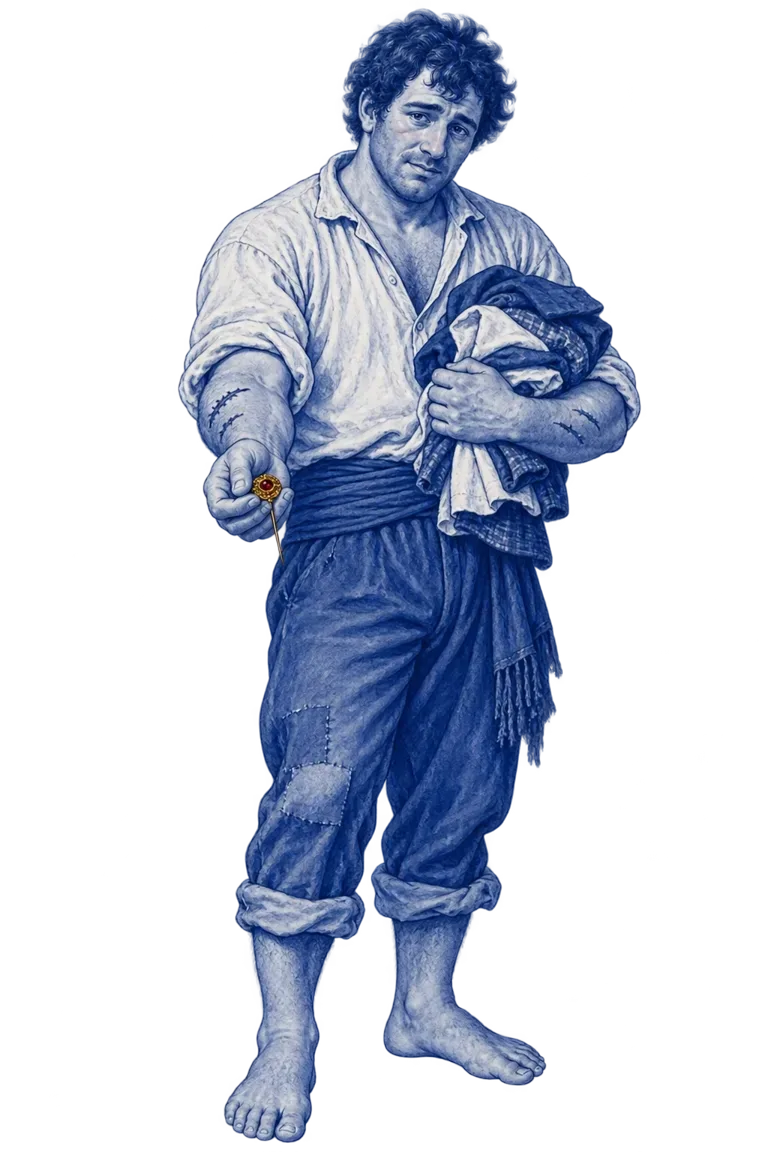

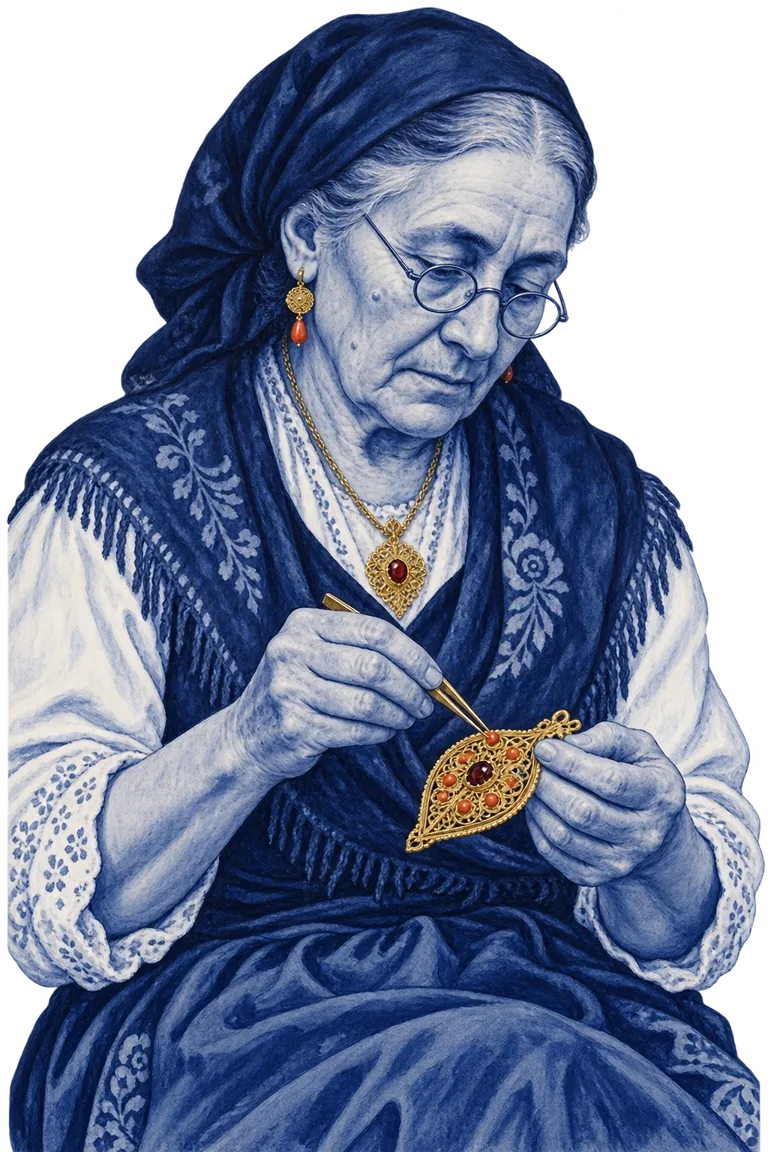



| Who | Role | Commissions | Art |
|---|---|---|---|
| Mestre Abílio | Your teacher, blind from cataracts, coaching by ear | His watch chain (Jan); his old drawing, made at last (Dec); the instalments | pitch |
| Dona Custódia | Benzedeira, steady trade | Her ring (Jan); a reliquary for rue (Apr); figas and coral horns in bulk (May); a jet figa capped in filigree (May); a meia-lua for a newborn (Oct) | pitch |
| Rosa da Fonte | Mother of a seventh son | Her mother's cordão (Feb); a coral teether (May); the São Bento medal before the christening (Jun); her eldest becomes your apprentice (Dec) | pitch |
| Gracinda Afonso | Enchedeira, romance | The filigree lesson (Mar); frames by the gram (all year); the heart she could never afford (Aug); her pair of rings (Dec, if romanced) | pitch |
| Tomé Dantas | Ferryman, romance | The ferry bell (Feb); a sea medal for his brother (Jun); his family mark on a ring (Jul); rings (Dec) | pitch |
| Sebastião Novo | Travelling goldsmith, rival, romance | His stall at the romaria (Aug); a cast heart to "fix" (Sep); he asks to learn filigree (Nov); rings (Dec) | pitch |
| The moura | Water spirit of the spring, romance | The comb, tooth by tooth in 916‰ (Jun); the coal payment; her treasure night | pitch |
| The Coca | The dragon of Monção | Earrings before Corpus Christi (Jun); scales by repoussé (Nov); next year's earrings (Dec) | pitch |
| The Fradinho | House sprite, the shop's cat | A ring for a holed hand (Mar); mischief all year | pitch |
| The legionary | A soldier of Brutus who drank from the Lima | His name inside a ring (Jul); one for the friend who stayed on the far bank (Aug) | pitch |
| Pedro Malasartes | Trickster | Gilded brass (Feb); a truth ring (Apr); the moura's gold (Sep); a fair scam (Sep) | pitch |
| Laurinda | Farm girl buying contas bead by bead | One bead a month, Feb to Jul; the necklace strung for the romaria (Aug) | today |
| Padre Firmino | The parish priest | The monstrance, mended before the inventory (Apr); the processional cross (Apr); first-communion medals (May) | today |
| Dona Albina Araújo | The morgada: heavy chains, watches the scale | Her grilhões (Feb); a Coração de Viana for the romaria (Aug); her daughter's first cordão (Dec) | today |
| Américo Lima, "o Brasileiro" | Back from Brazil with money | Two libras mounted (Jul); a watch chain (Jul); a signet with his monogram cut in reverse (Sep). He wants a coat of arms too; that goes to a die-cutter in Porto | today |
| Dona Zulmira Lima | His wife, Paris taste | "Make it in platinum, like Paris" (Sep); the garland brooch (Dec) | today |
| Deolinda | The August mordoma | The family's gold borrowed and cleaned (Aug); arrecadas (Aug); a borboleta at her betrothal (Oct) | today |
| Senhor Belmiro Passos | Assayer, Porto | Assay results all year; one honesty test | today |
| Mestre Gaspar Malheiro | Your old master, Rua das Flores, Porto | Letters; lends you the torch; the platinum client | today |
| Ermelinda | Fisherman's widow | A São Pedro medal (Jun); a mourning locket with his hair (Nov) | today |
| Rosalina and Serafim | Bride and groom | Her ring and his third cordão (Oct); wedding rings and the three-vintém coin (Dec) | today |
| Tia Benta | The weaver everyone calls a witch | A silver ferrule for her distaff (Mar); a signo-saimão she can't be repelled by (Jun); witch night (Dec) | today |
| Agostinho | The living man leading the souls | Rebuild the cross while he holds it (Nov) | today |
| Joaquina das Dores | A soul from the procession | Buy back her wedding ring (Nov) | today |
| Adelino | Runs the werewolf's road | A pin with a hidden point; a token for his folded clothes (Oct) | today |
| Palmira and Tia Domingas | Enchedeiras: fast and careless, slow and perfect | Hired all year; a magnifier for Domingas (Nov) | today |
| Dona Aurora Cerqueira | The Republic's new schoolteacher | A pin (May); her father's watch (Sep); she explains the escudo | today |
| Tia Benedita | Washerwoman, gossip | Rings found in the wash, whose owners you identify by their marks (Mar, Jul) | today |
| Dona Glória Marinho | Descendant of the sea-woman | A sea-green pendant that "wants to go home", re-alloyed (Sep) | today |
| Walk-ins (10) | Villagers | Resizes, chain repairs, lost glass stones, cleaning, and lighter hooks for meia-libra earrings heavy enough to split an earlobe: 12 quick jobs | needed |
The total is about 95 commissions: about 30 quick (5 to 10 minutes), 50 standard (20 to 30) and 15 big (45 to 60) (inferred).
Systems
Money
- Currency: the ledger is in réis written with the cifrão, so 1,200 réis is 1$200. On 22 May 1911 the escudo is decreed at 1,000 réis, and the ledger switches to the new notation: the same money becomes 1$20 (Wikipedia, Escudo). Nothing else changes that year. The escudo coins only came between 1912 and 1916, the réis notes stayed in use (overprinted "República") until 1929, and people said "mil réis" for an escudo into the 1990s. So every coin a customer hands you is still réis, and Dona Aurora explains the rest.
- Coins on the counter: bronze 3 to 20 réis, silver 50 réis to 1$000. Gold coins had left circulation after 1891. The British sovereign passed at 4$500, and Minho women wore sovereigns as libras.
- Balancing anchors (derived from the escudo's parity of 675$ to the kilo of gold, so not a period price list): fine gold about 675 réis a gram, 800‰ about 540, platinum about 1,400.
- Gold is sold by weight. A quote is metal + labour + margin. Customers often bring their own gold, as Custódia does.
- Income:
- labour
- margin on metal
- old gold bought under value and remelted
- pawn interest
- fair and romaria stock
- cleaning and lending gold in August
- Costs:
- Abílio's monthly instalment
- fine gold, silver and stones
- consumables: blades, solder, charcoal, borax, acid, compounds
- enchedeira wages by the gram
- assay fees and post to Porto
- tools and upgrades
- Ruin: a ruined piece goes back to the melt pot minus a real melt loss, and the consumables it used are gone (built in the slice:
slice/src/economy.ts,failures.ts). - Lemel: the bench skin catches filings. Sweep it monthly and refine it to recover a little gold.
- Pawn book: families pawn gold in February and March and redeem it in good months. Forfeits become your stock. Joaquina's ring is in there.
- Tuning: the economy is pure TypeScript in
packages/corewith unit tests, so the balance is tuned by simulation, not by feel.
Standing, trust and gossip
- Four things grow: money, standing in the parish, trust with each customer, and pages in the pattern book.
- The washerwomen at the lavadouro talk about your work. Good pieces raise your standing; refusals and late work spread too. Standing gates the big August clients. This is our version of Dressmaker's gossip column.
Enchedeiras
You send filled frames out to women who fill them at home, paid by the gram. Gracinda is the best, Palmira fast and sloppy, Domingas slow and flawless. You check their work before soldering: a loose coil you miss falls out in the fire. They are how big August orders get done.
The fair and the romaria
In July you make stock on spec. August is the romaria, September the Feiras Novas. You price a stall against Sebastião's cheaper cast "filigree", and buyers tell the two apart by the open hollows of real work.
Your stall against his
| Piece | Yours | His |
|---|---|---|
| Coração, 3.5 g | 9$00 | 5$50 cast |
| Arrecadas | 6$50 | 4$00 stamped |
| Contas, six | 3$20 | 2$10 |
| Sold today | 7 | 11 |
Real filigree has open hollows. His hearts are sand-cast and die-stamped.
GracindaTell them to hold it to the light. His hearts have no holes.
The rival
Sebastião Novo is the itinerant goldsmith who sand-casts and die-stamps what you fabricate, the way Gondomar's workshops stamped barrocos from relief dies. He's a rival at first, possibly decent underneath, and a romance option. The values conflict is real: certified filigree excludes cast fill.
Romance
Romance is optional, open to every player, and built on commissions rather than gifts: you court someone by making them something. The four routes are Gracinda, Tomé, Sebastião and the moura. October's red ear of maize is the courtship beat. The ending is a pair of rings you make yourself, in gold or, if you've reached it, platinum.
The Fradinho
The shop's mischief system. Paillons go missing and stones move. Leave him a thimble of wine and lost things turn up by morning.
Assay and the maker's mark
- Finished gold goes to the Porto assay office for its mark: a deer's head for 800‰ and above, a swallow below.
- Braga's office closes in 1911, which is a real date in our year.
- You design your maker's punch as a sigla.
- Belmiro's honesty test: once, a piece of yours comes back at 790‰, just under the deer. Belmiro won't bend. You can melt it and redo it, or sell it unmarked at the swallow's price and tell the customer why.
The apprentice
In December Rosa's eldest starts at your bench. You coach him by ear, as Abílio coached you: you hear the saw bind or the flame roar, and you tell him. It's the same verbs, played from the other side. I'd treat it as the epilogue and the launchpad for a second year.
Photo mode, gallery, free bench
- Every finished piece is a recipe of a few KB, so it can be photographed, shown in the year's album, loaded into the free bench, and later shared through the gallery.
- That fixes two of Dressmaker's complaints: nobody wears the piece, and there's no sandbox.
Assist and accessibility
- Assist is for the hands, never the judgement, and it's free. Built in the slice: Assist, the colour-named heat chart, "Scrap it".
- To add:
- reduce motion
- no flashes
- colour-independent heat labels everywhere
- one-handed play
- text size
- subtitles for any voice
Saves
Local saves from day one, with cloud saves and the gallery on a tRPC + Prisma server on Drydock later. The server re-runs core to validate shared recipes.
Tablet first
- Touch is the controller. Saw strokes are vertical drags with a rhythm; the bezel push is a directional swipe; polishing is scrubbing; the mallet is a tap.
- Apple Pencil is the premium input. Pressure can map to breath on the blowpipe and depth on the burin. Safari's PointerEvent reports Pencil pressure, so a web-view bench gets it for free (inferred; verify in the iPad spike).
- Mac runs the same build on Apple silicon, with mouse and trackpad.
- Performance is the riskiest bet. The bench uses bokeh, bloom and transmission; on a weak GPU, bokeh and transmission go first (cliffnotes). The first spike renders the slice's ring and a rose-cut garnet on an iPad.
- Offline, with no account required. Cloud saves are opt-in.
Screens: built, mocked and to build
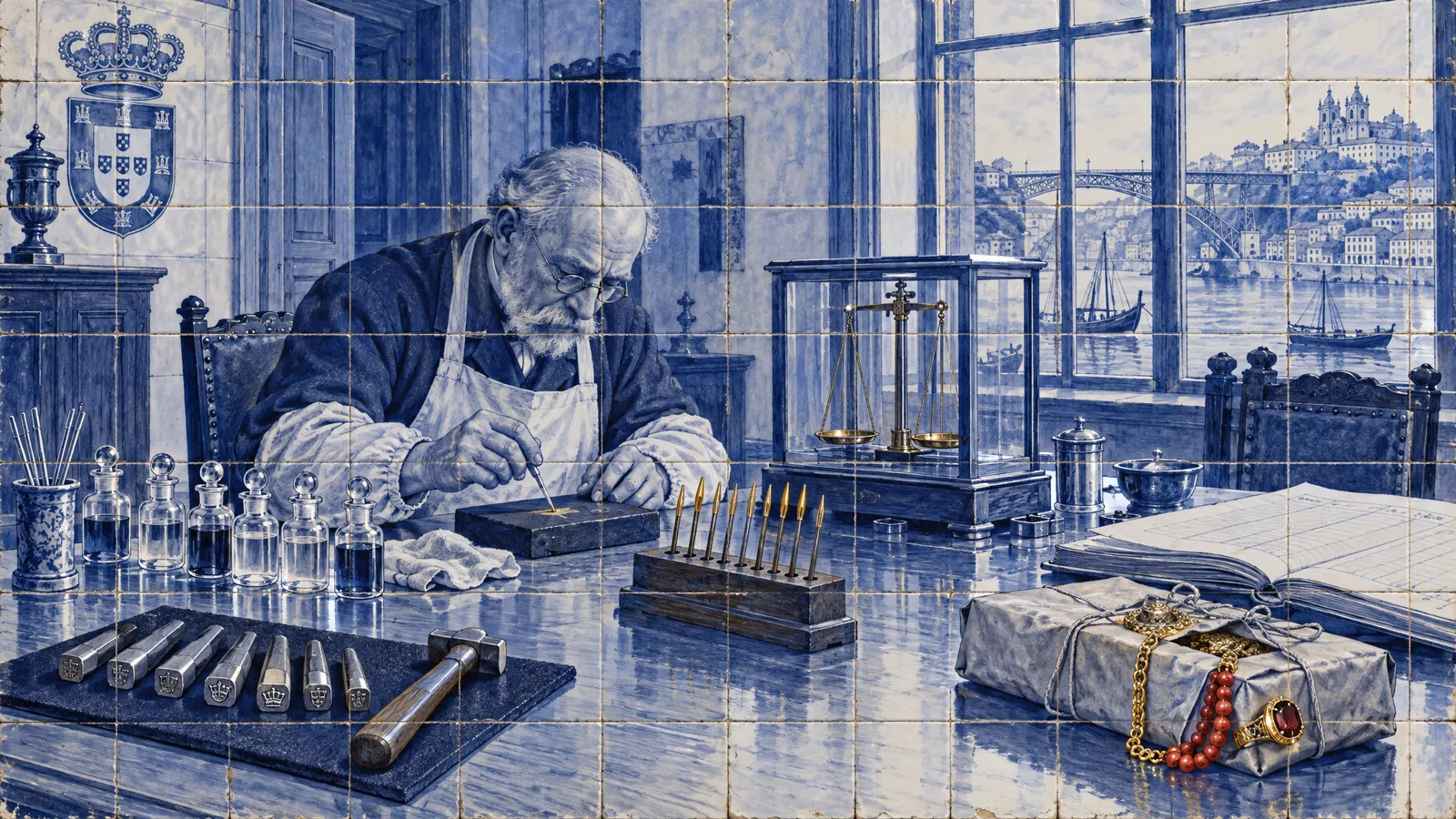
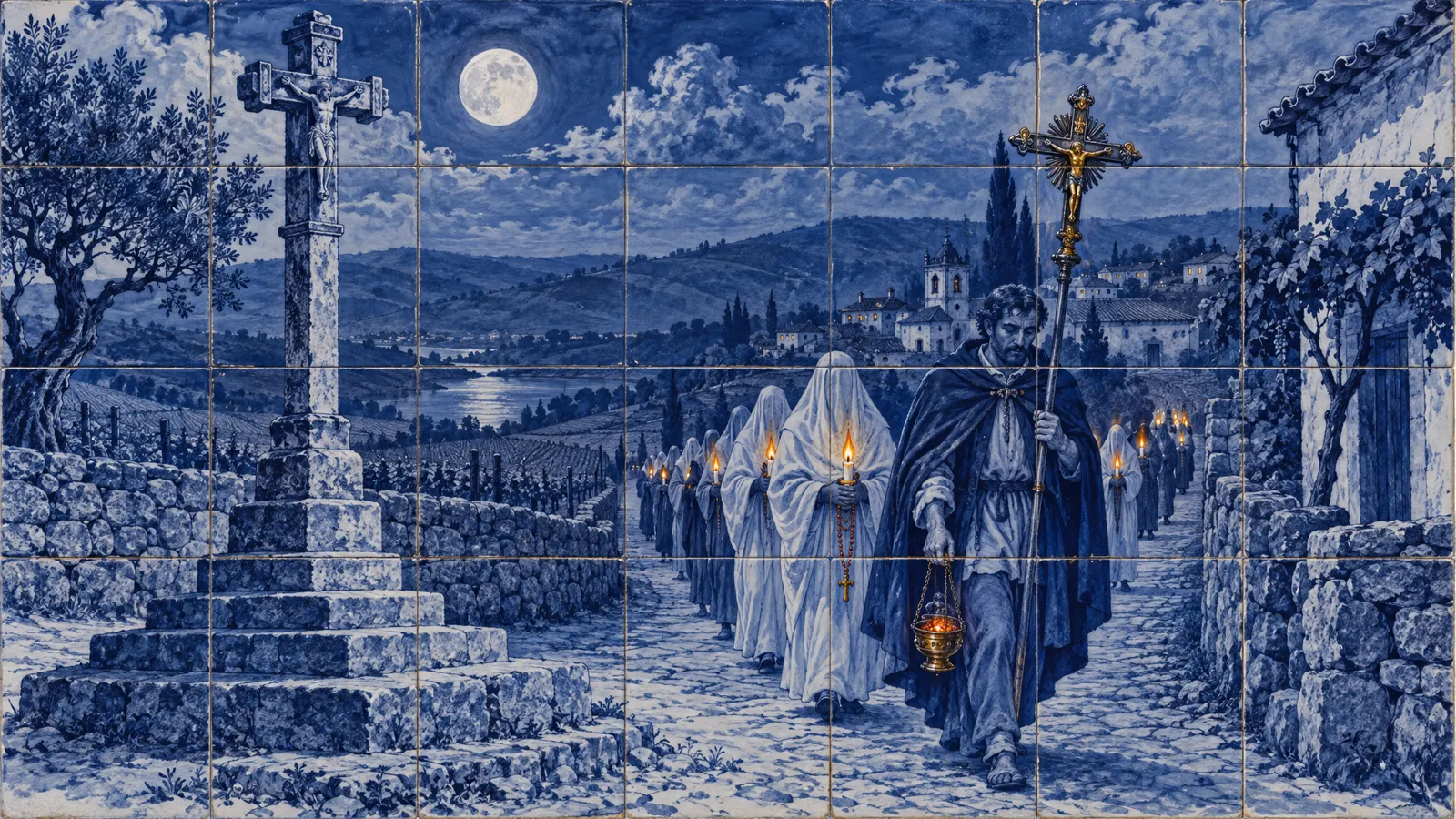
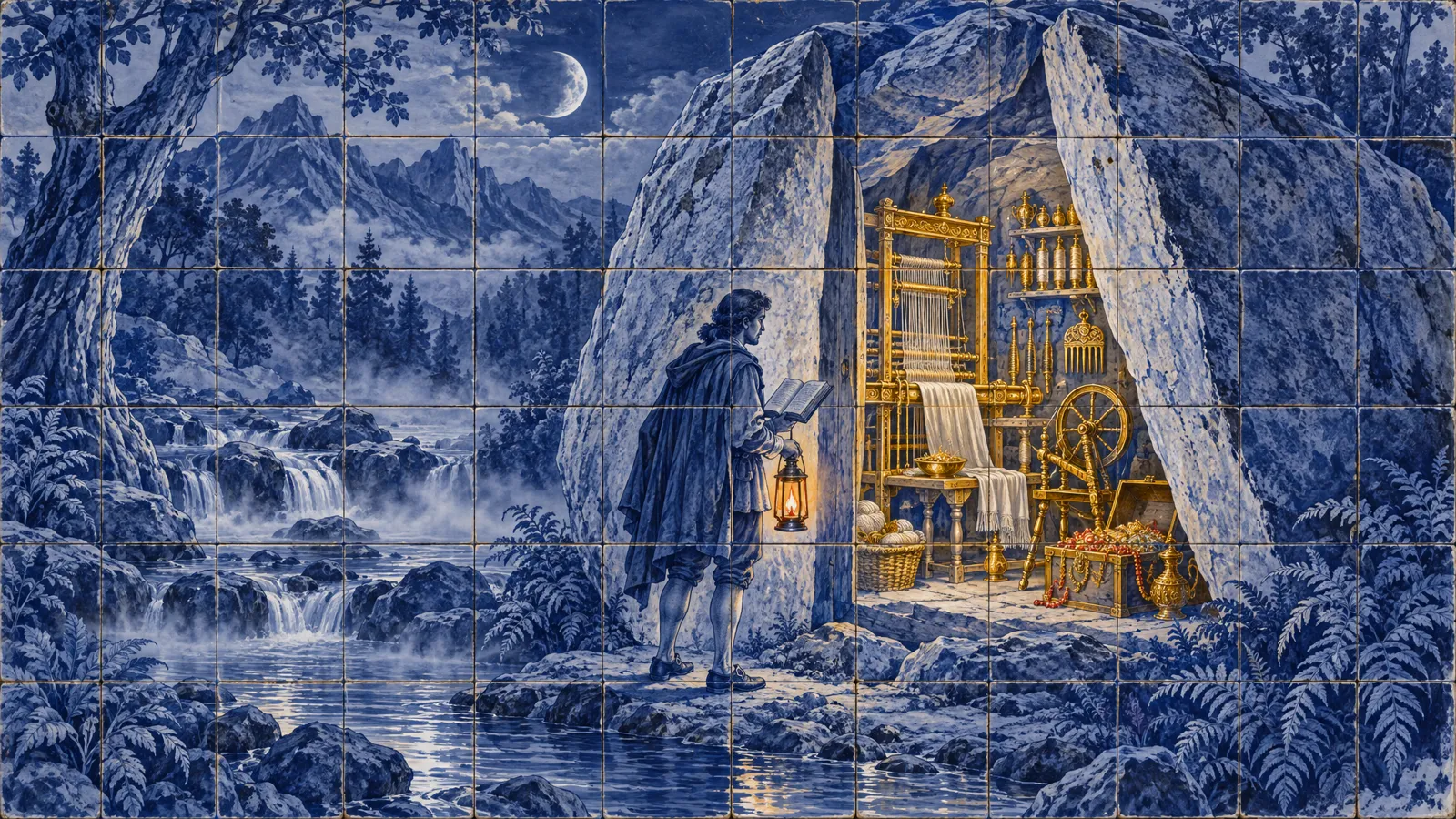
Twelve concept plates made today for places and moments that had no art. They set the look for screens still to build; they aren't final plates.
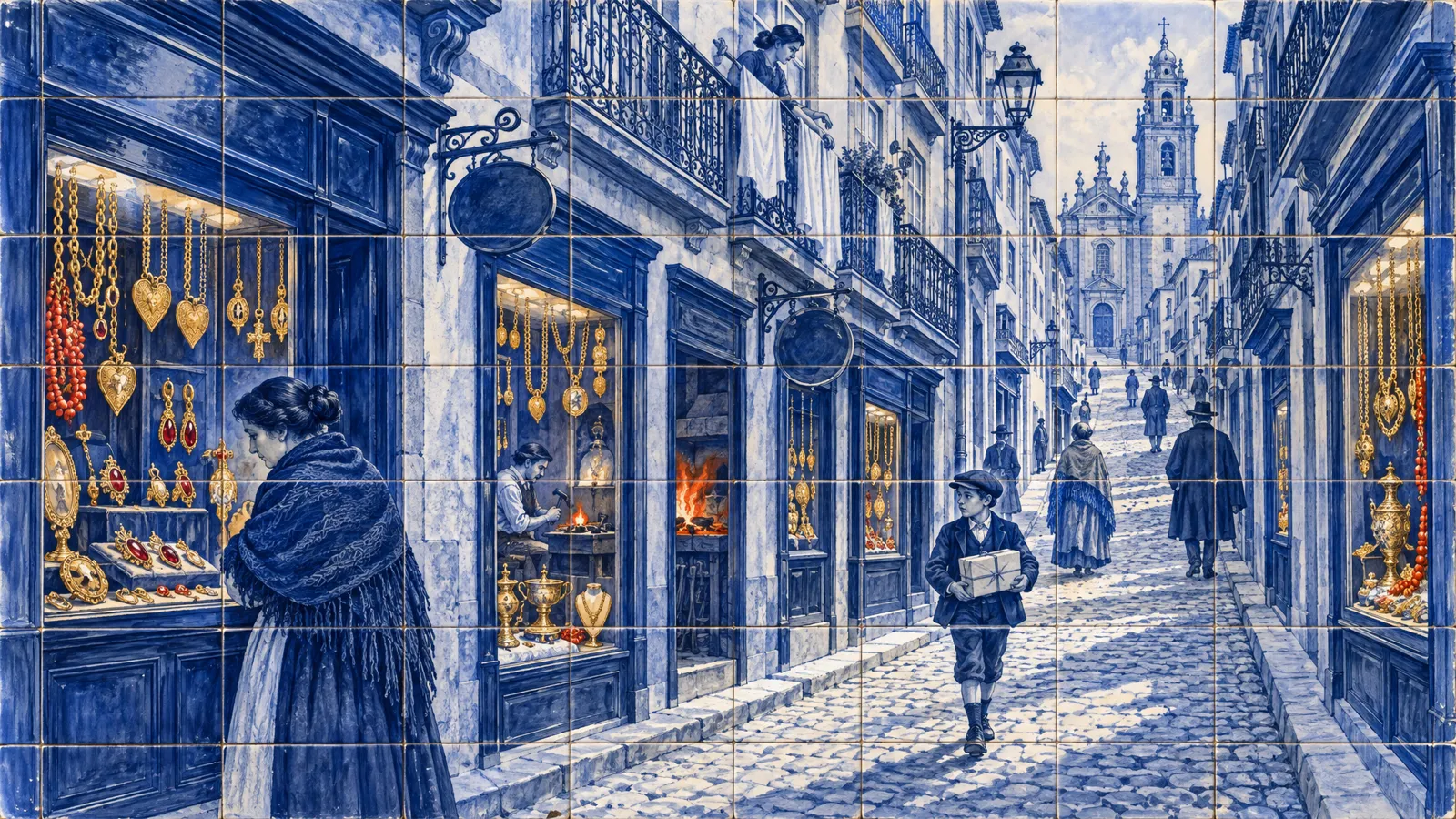
| Area | Screen | Status | Picture in the report |
|---|---|---|---|
| Counter | Counter, Reckoning | Built | Screenshots |
| Weigh and quote, Touchstone, Pawn book | New | Mocks | |
| Bench | Measure, Design (band), Mark and saw, Anneal and form, Solder, True, Set, Polish | Built | Screenshots |
| Fill the frame | Mocked in the pitch | Mock | |
| Design for every other piece; maker's mark; free bench | New | — | |
| Alloy and cast, roll, draw wire, twist, cuttlebone and sand cast | New | Tool wall concept; mocks | |
| Pierce, file and shape, engrave, dome, chase and repoussé | New | Engrave mock | |
| Pickle, granulate, enamel, platinum torch | New | Enamel corner concept; mocks | |
| Build the frame, powder solder, join halves | New | — | |
| Prong, flush and millegrain, string and knot, brush, patina, chain | New | — | |
| Shop and world | Day planner, parish map | Mocked in the pitch | Mock |
| Lavadouro gossip, letters, ledger and instalments, pattern book, tools and upgrades, enchedeiras, fair stall, display window, assay result, lemel | New | Concepts: Porto assay, Rua das Flores, fair | |
| Story | Folklore nights, romance scenes, story moments, the apprentice, the year's album | New | Concepts: crossroads, desfolhada, magusto, Consoada, Tear de Ouro, sacristy |
| Shell | Title, new game (name, pronouns, look), settings and accessibility, saves, pause, achievements, credits | New | — |
Counted screen by screen, that's 10 built, 3 mocked and 55 to build. Bench screens are the expensive unit: each one is a 3D station at the True/Polish bar, with grading, failures, assist, sound and strings. Most share a station rig (the fire verbs share the fire bench), which is why there are 9 rigs for 38 verbs.
Assets and what they cost
All of it is generated or tool-made, with no paid humans (memory: no paid humans in asset budgets). Unit prices are measured from art/ledger.jsonl: $0.042 to $0.043 a portrait or plate, $0.055 with references, $0.075 for extra-high quality. Spent so far: $7.86 in total, including $1.38 today for 32 concept images.
Images
| Line | Finals | Unit | Cost |
|---|---|---|---|
| Location plates | 28 | $0.043 | $1.20 |
| Seasonal and night variants | 84 | $0.055 | $4.62 |
| Gridless + depth + layer passes (3 per plate) | 336 | $0.055 | $18.48 |
| Story moments | 60 | $0.055 | $3.30 |
| Portraits: 31 named, 10 walk-ins, 6 player looks | 47 | $0.043 | $2.02 |
| Expressions and outfits | 170 | $0.055 | $9.35 |
| Props | 80 | $0.043 | $3.44 |
| Parish map (4 seasons) + 24 vignettes | 28 | mixed | $1.62 |
| Item icons (metals, stones, solders, tools) | 120 | $0.043 | $5.16 |
| UI chrome | 30 | $0.043 | $1.29 |
| Bench textures for 9 stations (PBR) | 48 | $0.066 | $3.17 |
| Store art | 40 | mixed | $2.40 |
| Static ad images | 40 | $0.055 | $2.20 |
| Subtotal | 1,111 | $58.25 | |
| × 1.3 rerolls | $75.73 |
The jewellery, metal, fire and tools on the bench are procedural code, so they cost nothing in images.
Everything else
| Line | Route | Cost |
|---|---|---|
| Music, about 75 minutes | Suno Premier, 3 months (paid-plan output licensed for games) | $90 |
| Sound effects, about 430 | Free Sonniss bundles + ElevenLabs SFX for the gaps | about $15 (inferred, scaled from the 250-sound estimate) |
| Voice | Text-only at launch (release plan decision 9) | $0 |
| Voice, English, if you add it later | ElevenLabs v4, about 835K characters with retakes, plus voice design and checking | about $128 |
| Translation | Opus 5.5 Batch, translate + self-review, about 165K words | about $18 a language |
| Apple Developer Program | Yearly | $99 |
| Steam Direct | The hedge page | $100 |
| Google Play | Only if Android ships | $25 |
| Hosting | Landing page, mailing list, later saves, all on the existing Drydock box | Incremental cost not measured |
Totals
| Bundle | Cost |
|---|---|
| English, iPad + Mac, text-only | about $380 (images $76, music $90, SFX $15, Apple $99, Steam page $100) |
| + the top 7 languages, text | + $126 |
| + English voice | + $128 |
| + Android | + $25 |
| Ads | Sal's budget, separate. See next section |
These are tool bills only. Claude and agent time to build it isn't estimated, as agreed.
Ads: what the money can and can't do
Sal: "We'll just run ads against it and see if we can make some amount of money." The research (research-ads.md, summarised here with its sources) says cold ads won't pay back on a $14.99 premium game. The full file is in the session scratchpad; the key sources are linked below.
| Number | Source | |
|---|---|---|
| Net per sale at $14.99 (12% tax blend, Apple's 15%) | $11.21: also the most a sale can cost in ads and still break even | derived |
| Apple Ads, US games, 2025 | $2.03 a tap, $4.63 an install; generic keywords $2.81 a tap, $7.84 an install | AppTweak, Aug 2026 |
| Apple Ads cost per install for games | $3.48 → $6.14 from 2024 to 2025 (+76%) | MobileAction |
| What $14.99 needs on Apple Ads | 18 to 25% of tappers must buy. Free games convert 54 to 71% of taps, and no one publishes the rate for paid apps | derived |
| Meta and TikTok, US iOS free games, Q2 2026 | $8.06 an install; $6.36 per 1,000 impressions; 0.79 installs per 1,000 | Singular via GameDev Reports |
| Social cost per sale (Steam's 2 to 5% page conversion as a proxy) | $20 to $50, which is 1.8 to 4.5x the net | derived |
| A lower price | Makes it worse. At $6.99 you'd need free-game conversion rates while charging money | derived |
| Even F2P casual | Earns back 47% of iOS ad spend by day 30 | Liftoff |
| Published premium mobile cases with spend and return | None found. Playdigious leans on pre-orders and community, not paid UA | Mobilegamer.biz |
| AI art in ads | TikTok wants a disclaimer on the ad; Meta may label it; Apple has no rule. 85% of gamers are negative about gen-AI in games | TikTok, Quantic Foundry |
| Android | Premium games skew hard to iOS (Monument Valley 82/14). No source splits out Android tablets | Pocket Gamer |
What I'd do with ad money:
- Pre-order bursts. Apple lets you promote pre-orders. They bank demand into one day-one spike, which lands on the same day as any featuring. That's how ads can move the thin iPad Top Paid chart, and rank is how the halo works (about +7% organic, from one study).
- A capped Apple Ads Basic test. It bills per install, and for a paid app an install is a sale. Set the maximum to $11 and cap the month. Stop if it doesn't sell at or under break-even.
- Defend your own name with a brand-keyword campaign.
- Boost what already works organically. Bench clips with real sound (the solder flash, the saw snap, a heart filling) are the creative trend for cozy games. Boost the ones that already did well.
Not this: a standing always-on campaign expected to pay for itself. If Sal wants sustained paid UA anyway, the honest frame is a marketing budget with a stop rule, not a growth loop.
Build order
Gates, not dates. The cadence is Sal's.
| Phase | What gets built | The gate |
|---|---|---|
| 1 · Foundation | sal-starter monorepo (apps/game Expo, packages/core sim + economy + calendar, packages/content, packages/render). Port the slice's bench. Two spikes: the iPad shader and procedural filigree filling |
Custódia's ring plays on an iPad from the monorepo, and a filigree heart fills |
| 2 · Small, finished | January to June: the counter verbs, the metal wall, filigree, file and shape, dome, string; 12 customers; the map, the ledger, gossip; the free bench. Landing page and mailing list on Drydock; Steam Coming Soon page; Arcade form | A public TestFlight beta (up to 10,000 testers) of a finished half-year |
| 3 · The full year | July to December: platinum, enamel, chain, the romaria, the fair, romance, the apprentice, the gallery, photo mode | Every month plays end to end |
| 4 · Ship | iPad + Mac release: App Store pre-orders (up to 180 days ahead), a featuring nomination, localisation, accessibility, the ad tests | Live on the App Store |
| 5 · Ports | Steam (Electron, Next Fest for the port), Android tablets | — |
Deploy
- The game: built on the Mac box (no EAS), TestFlight, then App Store.
- The landing page, mailing list and later the save server: Drydock, which deploys from GitHub
dested/<name>on push to main. This repo has no remote yet, so phase 1 starts by creating the GitHub repo. The domain defaults to<name>.dested.com; pick the name with the repo.
Where it slots
That's Sal's call: I don't know what else is in the queue. The three shapes:
- Phase 1 now, as a bounded experiment. The two spikes answer the two risks (iPad rendering and procedural filigree) before anything else is committed. (Recommended)
- The main project now: phase 1 straight into phase 2.
- Parked, with the Arcade form and the Steam page sent now, so the clocks that don't depend on the build start running.
Risks
- Scope. 38 verbs and 28 piece models is a lot. The verb count is the cost driver; customers and commissions are cheap by comparison.
- Procedural filigree is the hardest unsolved technical problem, and the namesake craft.
- iPad rendering. The bench's look depends on post-processing that a weak GPU may not afford.
- The AI art. The label, the audience (85% negative in one survey) and Wholesome Games' stance. Arcade's view is unknown.
- The ads. They don't pay back cold. Without featuring and organic clips, a premium iPad game sits near the median (about 6,000 downloads and $30k a year).
- Arcade silence. It's harmless now, because nothing waits on it.
- Writing at volume. About 95 commissions of dialogue at the bar the slice sets, written with an LLM and checked by Sal.
- Folklore and history. Living traditions, real 1911 politics (the Republic, Church and State) and a real municipal festival (the Coca): written straight, with inventions flagged.
Decisions for you
If you say nothing, the default holds.
| # | Decision | Default |
|---|---|---|
| 1 | Where the build slots | Phase 1 now, as a bounded experiment |
| 2 | Price and model | $14.99, pay once. Not free-to-try with an unlock |
| 3 | Ads | Pre-order and launch bursts + a capped Apple Ads Basic test + brand defence. No always-on campaign |
| 4 | Every mechanic in this doc | Yes, all 38 verbs and 6 tiers, built station by station in the phase order |
| 5 | Platinum as the endgame tier | Yes: topped gold in October, all platinum in December. White gold stays out, because it's an anachronism in 1911: Richter's patent was filed in 1913, and it reached the trade around 1917 |
| 6 | The apprentice epilogue | Yes, and the second year grows from it |
| 7 | Voice | Text-only at launch |
| 8 | Android tablets | A later port, once the iPad has proven demand |
| 9 | The GitHub repo and domain name | Repo dested/goldsmiths-year, domain goldsmithsyear.dested.com |
| 10 | Arcade | Send the form now; take an Original deal if one comes, at any point before launch |
1911 facts the design leans on
These extend the craft and setting bible, and fix it in three places. Every line has a source; "derived" means my arithmetic on sourced numbers.
The Law of Separation, 20 April 1911
- Afonso Costa's law, 196 articles. Art. 4: "A República não reconhece, não sustenta, nem subsidia culto" (Parlamento).
- Art. 62: churches, chapels and the goods of public worship became State property, to be listed and inventoried "without valuation or seals". Valuables at risk went to the parish boards, depositories or museums (text of the law).
- Art. 63: a municipal commission did the inventory, parish by parish: the administrador do concelho, the finance clerk and a "homem bom" from each parish board (same source).
- Dated Minho inventories: Paredes de Coura on 24 July 1911, Cabração (Ponte de Lima) on 4 October 1911 (Blogue do Minho, and). Our parish's commission comes in July.
- Art. 57: processions only "where and while they are a long-standing custom". The romarias carry on as custom, now under civil tolerance (my reading; no 1911 Minho procession record found).
- Art. 176: no cassocks outside churches from 1 July 1911.
- Pius X condemned the law in Iamdudum on 24 May 1911 (Wikipedia).
- What it means at the bench: church gold is listed and can't be sold, so there's no melt-down trade from churches. Repairs come from the parish board or a lay brotherhood. Lay devotion is untouched: Minho processions dressed the saints' litters "with cordões from head to foot" (Mota).
- Fix to the earlier draft: Padre Firmino's repair now happens before the summer inventory, not as an April seizure.
The escudo, 22 May 1911
- Decreed by the Provisional Government at 1 escudo = 1,000 réis = 100 centavos, with a parity of 675$ to the kilo of gold (Wikipedia; Imprensa Nacional).
- The cifrão kept its place; only the unit moved. So 1$200 réis is the same money as 1$20 escudos (derived).
- New coins only from 1912 to 1916, the commemorative 1$ in late 1914. The réis notes, overprinted "República", stayed in use until 1929 (Centenário blog).
- "Mil réis" stayed a colloquial name for the escudo into the 1990s; the conto, tostão and coroa lived on too (pt.wikipedia).
- Gold coins left circulation after convertibility was suspended in 1891. Itinerant goldsmiths came back from their rounds with old coins and scrap (cascalho), "frequently weighed by hand" (Cravidão 1986).
Craft corrections
- White gold is out. The first commercial patent (gold, nickel and palladium) was filed by Richter of Pforzheim on 30 April 1913 (Google Patents). Belais brought white gold to the trade around 1917 (Lang). It became commercial in the 1920s.
- No lost wax. The modern lost-wax process reached jewellers in the 1930s (US 4,283,831). Gondomar used sand moulds and hand stamping from relief dies (Sousa and Felícia); cuttlebone is documented since the 16th century (Brepohl). Sebastião now sand-casts and die-stamps.
- No precious stones in folk gold. Minho folk gold used coloured glass, enamel and imitation turquoise, coral and pearl (Mota). Diamonds come only through Porto.
- Jet is old stock. Santiago's jet craft had no open workshop by the early 20th century, and was retaught only in 1916 (geocache page citing elazabache.es; secondary). Coral came finished from Torre del Greco (JCK). The player shapes and mounts them, and doesn't carve them from raw.
- The cordão was hooked, not only soldered. Gondomar's engatadeiras hooked the pear-shaped links at home, piece-work like the enchedeiras (Mota). A real grilhão weighed 70.6 g at 52 cm.
- The touchstone resolves about 50‰ "with sufficient experience". A notch and nitric acid show plating as a green streak. Platinum ignores cold aqua regia; only hot aqua regia takes it, turning brownish red (Brepohl; Brepohl, white metals).
- Seals were a specialist's job. Die and seal cutting in Portugal sat with the Mint's die cutters; there's no record of village goldsmiths cutting them. A reversed monogram in a ring is our stretch, and a coat of arms goes to Porto.
- Liver of sulphur patina was in wide use on silver in early-20th-century France (Tissot et al.). Silver only.
- Left out: niello (no Portuguese tradition; at most a Russian snuffbox brought in for repair), mercury fire-gilding (if it appears, an old gilder's tremor shows the cost, and it's never rewarded), and goldbeating (a separate trade: the shop buys leaf).
- Pearl silk: the standard knotting silk dates from 1866 (Boley; commercial source).
What I couldn't verify
- How long a commission takes real players. Every hour figure is inferred from Dressmaker.
- Paid-app conversion on Apple Ads, Meta or TikTok; no one publishes it. The ad maths leans on proxies.
- Whether Apple Pencil pressure reaches the bench through the stack we pick.
- Arcade's view of generated art.
- The period gold price in réis. The economy will be tuned by simulation, not by a historical price list.
- Which flame, oxygen supplier and platinum solders a Porto jeweller actually used in 1911, and what eye protection.
- Whether the 1910 Porto brooch was solid platinum or platinum-topped gold.
- When platinum was first assayed or hallmarked in Portugal. The 1887 regime covers gold and silver only, so the platinum brooch may go out unmarked.
- What the 1911 Minho inventories listed, and any 1911 Minho procession record under art. 57.
- Whether cordão links were soldered or only hooked shut, and whether Gondomar had chain machines by 1911.
- Whether village goldsmiths cut reversed seals or monograms.
- Real against imitation coral in Minho folk gold; Mota's wording is ambiguous.
- How fast shop receipts moved from réis to escudo notation in 1911 and 1912.